
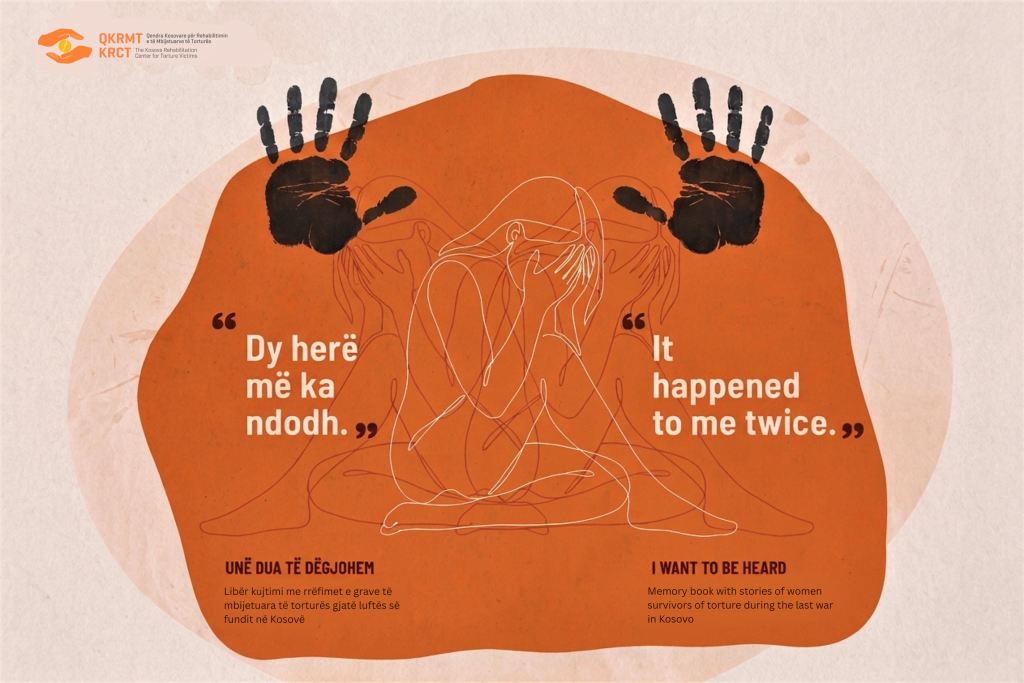
IT HAPPENED TO ME TWICE
She has been sexually abused twice within a few weeks. She is still struggling to be accepted by her family. Her younger son, a former KLA fighter, has observed from the distance when women were put inside a building and raped. He has also seen his own mother enter that building. He is not supportive of her. He even condemns her for this tragedy. He tortures her “Why did you accept to enter that building?”.
“They would fear that NATO would see their movements and bomb the school. So they came in at night, did it quickly and got out. They’d say ‘Let us do this quickly before they bomb us.’ They banged my head really hard.”
First Person Narration:
YOU COULDN’T DISTINGUISH BETWEEN THOSE BASTARD
My mum raised three children, me and two brothers. I was the oldest. My brothers have died, only I still live. I grew up on my own until I was six. At the age of six my parents divorced. My father remarried. They divorced because my mum could not bear any more children. That was the only reason. So my father remarried and then a year later he had a son. One year after that he had another son. I lived with my father and my step mother, but I grew up with the feeling that she was not my mother. I never saw my mother again. She remarried and I never saw her again. Until I got married myself, we had no contact with one another at all.
I only finished my first year of elementary school. In fact, I did about six months of it. My father interrupted my schooling as he wanted me to help with raising up my little bothers. My step mother could not manage on her own, plus she had two small children in a row.
If I were to go to the yard and play with other girls my age, my step mother would complain to my father when he’d return from work, saying “Your daughter would not help me.” I would always fear that my father would punish me, asking “Why are you neglecting the boys?” I grew up a bit, and at the age of 12 he had me engaged. My father did it on his own, because I knew nothing. It was not like nowadays when girls chose the loved ones themselves… no, No, No, I had never seen my husband beforehand. My father had done the military service with him. He was my father’s generation. Yeah, that’s it. My husband the same generation as my father. He had been married for 25 years with his first wife. His wife was alive, but she had had problems bearing children and that’s why he had decided to try marry a young girl. I was still a child. But he was happy to have a child like me. He said, “A child will bear you children, an old woman is hopeless.” I never knew what it meant to engage and get married before. So when the day came, he came to ask for me and said, “We want to get a bride, she is suffering here. You have a lot of children and she cannot cope…” My husband came with his wife. So they came and made a deal with my father. They kept me “under the ring” as they’d call it, for about two weeks. They even brought some clothes as engagement present. Two wooden trunks they were. The deal was to come and take me after two weeks had passed. The wedding started and the girls started singing. When the women who were with the groom’s wedding guests came, the girls would sing making up lyrics to mock them. My cousins were all doing that for example. I knew nothing about it at the time. They’d come up with lyrics. My friends would take care to see that the traditional wedding rituals were observed. But I felt no pleasure at all. When I came to my husband’s place, they’d await us with musical instruments, singing… There were many invitees. But at the time it was the month of Ramadan. Some people were fasting some were not. The imam was also there. Than the tradition was for the brother in law to pick you up and send you to your bedroom. So he picked me up and it was easy for him, as I was still a child. He was about 40 at the time, I was only 12 and my husband was 42 years old. He had been married for 25 years to his first wife. Then he came to the bedroom, he started taking off my wedding dress and my gloves. And I was scared and started to cry. And he said to me, “Why are you crying, you will have alot of fun and you will enjoy it.” He also said “I will take you to your mother, and you will see her. So don’t you worry about a thing. Your mother will come to you.” So he would say things like that. Than he suggested that we lay down. He asked me to take off his shoes and socks and wash his feet. I had not done that before in my life. I found a pot and some water and managed to wash his feet. Then he asked me to undress him and prepare him for bed. I couldn’t do it. “Come, don’t be shy for from now on I am yours and you are mine. We will share everything from now on” (sighs). I remember that first night like it was yesterday. I undressed him and we lied down. He started to touch me, caress me. But I didn’t feel comfortable. I cried, not silently but loudly, I cried and sobbed, and was very loud. He asked me to calm down and not cry. “How can I not cry? Where am I here?” “You will have fun and enjoy yourself.” “No,” I said, “I will never have fun!” Then we started the intercourse, but, you can imagine, having an intercourse between a grown-up middle-aged man and a child. So I lost my virginity. I saw my blood and got even more freaked out. He saw it too and said “Ah, that is good. That is very good.” “What’s good about it?” I asked. “You have ruined me.” He said, “No, that is a good thing.” I had no blood coming out of me for another three years. When I turned 15, I had my first period. And they’d say “The young bride is going to have a belly” and I’d ask “What belly? I already have a belly!” I was a child and had no idea what they meant by it. But my husband was nice to me, I must admit that. His first wife too. I confess. They were both very nice. And then I got pregnant. I had mixed feelings about it. I was happy to become a mother, but scared I might abort the fetus. I was under alot of stress somehow. Now I have two sons.
My husband said “I feel sorry about you. I should have taken you for a grown-up son of mine, but instead I took you for myself. I feel like I am with my own child but what can I do.” I said “What can I do? It was my father’s decision. I had to agree to be with you.” I really went on really well with his other wife. She cooked for me, cleaned for me and took care of me as if she were my mother and not the other wife. She was really very nice to me and we did get on really well.
Then my husband died. Although he was much older, I was very pleased with him. He would take me places. We went to Brezovica. We went there and had fun. His other wife looked after my children at home, and I went there with my husband. We went to Matarushka Bath, with his friends and their wives for two years in a row.
Then my mother came to visit me. My mother had heard that I got married. My mother’s sister was married to my father’s brother, so mum would get all of the good news and the bad news. My aunt told her about my marriage and then five or six months later, my mother came.
When she first came, she went at my husband’s, but I had been visiting my father back home, so we did not meet. Then my husband took me to where my mother was remarried. I started going to my mother’s for visits. I had much fun. I’d go and spend a week there. She did not have any other children there. She had told the other husband that she was forced to leave a daughter behind and therefore wanted no more children. Her husband’s children from his first marriage loved her dearly. They would also treat me like I was their sister.
My children loved me and supported me. But they loved my husband’s other wife more. They loved her much more. Her brothers lived abroad and would send her some money, and then she would give some money to the children so they would love her. She would give them, in dinars at the time, sometimes 5, sometimes 10 or 20 dinars even.
My oldest son found his wife on his own. He was in school and a friend of his said he had a neighbor, and introduced them. They got married. We were relatively well off. They had a big wedding, we bought a lot of clothes for the bride.
When my mother’s husband died, I took her to live with me. She had nowhere to go. The Serbs had burned her house in Vushtrri. My aunt’s son took her to live with her brothers. But my oldest son said “Mom, go get granny, she is living with your brothers!” So we went and got her and now we live together in the same house. My sons live in another house with their wives and I live with my mother in another one.
Before the war I remember the Serbs came to get the weapons from my husband. They came to bust up our house. He had two lawfully owned weapons. So they came to ask for the weapons. My husband wouldn’t give them. He said he possessed them legally, why give them?
My husband died before the war started. He had a high blood pressure. The Serbs had beaten him up in the protests. He was spitting blood and then he died.
My youngest son joined the Kosova Liberation Army. When the war started they would not let us settle in one place for more than three days. They would drag us from one place to the other.
I was with my daughters-in-law, with the neighbor women, with my sisters-in-law. There were many of us. And we were on a tractor with our brother-in-law. They took our tractor and made us walk on foot. My daughter-in-law had a suitcase, I wanted to help her with it. The minute they removed us from the tractor, they set fire to it. We would walk amid soldiers on both sides. Tanks were moving behind us.
They took us to a village school. Once they took us there, they kicked out all of the old men and women, as well as the children, and kept us inside. They had long knives. What could have happened inside there? The worst thing possible. Sexual abuse. Of the worst possible kind.
They came at about 10 o’clock in the evening. We were alone inside. We had no lights, it was an utter darkness, just like a prison. We couldn’t see a thing. And they would come in, it would last for one hour or two, and then they would leave. As soon as they separated us, we knew what was going to happen. They left all of the elderly and the children outside. They kept the young girls and women. I wasn’t the youngest or the oldest. It lasted for an hour and half.
They would fear that NATO would see their movements and bomb the school. So the came in at night, did it quickly and got out. They’d say “Let us do this quickly before they bomb us.” They banged my head really hard. They banged my head so hard, they threw me on a toilet and it still aches.
We saw all of the other women being raped. We cried and scream. And the bastards, you couldn’t even tell which one was which. They all wore masks.
So, they feared that NATO was going to bomb them and they were rushing to finish it and leave. We’d be in there until 9 or 10 o’clock next morning. Then they’d let us come out of there.
We cried all night long. “What happened to us?” “What they did to us!” We’d cry and tell each other things like that. My husband’s other wife was outside. She said to me “I heard you scream, I heard you all scream.” She knew what had happened to us and she had cried together with us.
I felt so terrible. They let us go one morning. Then we never saw them again. They let us walk away. We went to a village and stayed there for two nights. Someone suggested that we go home. As we went home, they’d observe us from the distance and shoot at us from a nearby hill. We entered a house, all together sheltering inside it. All of the houses had been burned down. It was terrible. After a while they come down and asked “Is someone inside? Come out as we will not let anybody come here anymore. We have burned down everything” I did not dare utter a word there. I was so scared; I never spoke a single word. We all went outside. We had baked some bread during our stay there. They were still in the oven so I went and took them out before we left. I put them inside a sack and carried them in my back. Some women said, “Don’t take that bread. They will see it and then kill us.” I said “Let them kill me, and if they do, I want to be carrying my bread.” They asked us if we had all gathered. There were men, my husband’s relatives from the villages.
As we walked for a while they stopped the men and tied their hand behind their backs. And then they killed the men. Wherever they went, they would burn the houses they’d encounter. They had some arms and they would use them to burn the houses. I don’t know what sort of an arm it was. It would surprise me to see that you can burn a house with an arm. The roof tiles would fall in front of us. They killed the men. Children would see their fathers being shot and they started to scream. We did not see the ones who shot the men any more. They took us to another village. They went away, disappeared. They left us in that village and policemen in uniforms came out, saying “Line up, the doctor will check you.” Check what? There was nothing there. They just wanted to have us in that house and leave us there.
They left us in the yard until dusk. They wouldn’t leave us go anywhere. In the evening they decided which ones from us should enter the house. They were selecting the young women and Girls.
There were three or four rooms in that house. It was a two-store house. They would point the finger and order you to enter the house. They were policemen in uniforms, but they all wore masks so I could not recognize any of them. But I saw that there was a policeman who knew us all too well. He was from our village. When they got us in there, he goes to another one, “Get her!” But the other one did not respond. “What is it? Are you afraid of women? What can they possibly do to you? Why are you fearing them?” And then he said, excuse my language, “These Albanian women are good for sucking it.” And then I said to him “So it is you? You are the one who came to our village and collected our arms?” And he said, “I came here just for the spite of your husband!” I know he was the first one to come for the arms. And then they tore my clothes, they ripped them lengthwise. I started to scream and cry; I cried and screamed. After them the paramilitaries came. Long greased hair, unwashed, dressed in black clothes. I just cannot describe what we went through. They would not let us in one place for over three days, moving us from one place to another. The sexual violence was horrible. I’d rather they killed us, slaughtered us to death, decapitated us, or mutilated us by cutting an arm or a leg, whatever, but not have us experience that. That was horrible.
They were shouting and screaming from the other rooms too. They took out some syringes in which they had some white liquid. They gave that to us so as to numb us down. I don’t know what it was, but they’d give that to us, and then I lost my senses and don’t remember anything until I woke up the next morning. When I got up in the morning, I noticed blood coming out of my stomach. They had cut my stomach with a knife, and I was bleeding. I don’t know what they did.
I was totally naked. I couldn’t stop my bleeding. I was covered in blood. A friend of mine gave me a garment. We left the house as they were not there in the morning. We walked and walked. We would stop from time to time to check on the others. So it happened to me twice. Yes, twice it happened to me.
When the war ended we all knew it because we saw the NATO troops enter. When they first came we thought they were Serbian forces. They also came with tanks, trucks and flags. When we saw the flags we were so relieved. The men in the mountains were also aware of the end of war. “We’re free! Free!” The Serbs were all trying to get away. They were singing while withdrawing. The bastards were finally withdrawing. They lifted their three fingers, yelled and swore.
That’s how this life is. Joy and sadness. Sadness and joy. For example, my younger son had seen them ordering to enter that house and said to me, “Why did you accept to enter there? Why did you enter?” He was a KLA fighter. The KLA soldiers saw us from the hills. They were following us from the distance. And he says “Why did you accept to enter that house?” I say “I was expecting them to kill me or slaughter me altogether. I thought they would cut some limbs so as to leave me disabled my whole life. They didn’t, they only wanted to please themselves, and do the improper things so us. They raped us; abused us.”
I was having such a hard time with him. Such a hard time. With the younger son. He was not supportive of me at all. The other one, as he had his own wife, he would understand. His wife was also raped. He could do nothing about it. He was with the soldiers. He did not dare do anything. They were left in the mountain. They were saying, “We could kill them!” “Yeay, right you could. You could not, because they were so heavily armed and what arms did you have? A gun in your hands.” They luckily ran to the mountains and were sheltered there.
After NATO entered, we continued our way towards home, to stay in our yards if necessary. There was nothing else to do. That’s where we would stay, in poverty. We had nothing.
A charity organization came and gave us a tent. It was small but better than nothing. At least we could shelter our children. What else were we to do?
I was in a hospital with a woman from Gjakova. Her daughter was a member of the parliament. And the girl came to visit her mother and her mother told her I am from Drenica. The girl asked me how did we manage to cope during the war.
Tears started to pour out of my eyes. She asked me not to cry. “I know everything”, she said. “Did you report it anywhere?” “Report what?” Then she explained to me and said that she could go and do it for me. Then I said, “I will tell you like you were my sister about what has happened. But I never dared report anywhere.” She gave me the address of the organization. If it weren’t for this organization, maybe I would not be here today.
I was very disturbed afterwards. I tried to hang myself. I tried to kill myself. My brother-in-law found me as I tried to hang myself. A friend of mine killed herself by drowning in the well. We had both suffered the same tortures. She decided to end it by throwing herself inside a well. We just could not live with ourselves and wanted to end our lives. We simply didn’t want to live any more. But my brother-in-law found me. When he did I was holding the rope and had climbed an old chair. I wanted to put it over a branch and then push the chair with my leg and end it. But I had been destined to live. I would rather be dead than have to live like this.
After the war we had more problems than joy. My youngest son would not support me. I still have problems with him. He just won’t support me. He is married and has his own family.
The older son knows about it too, and he understands. Nobody wanted for this to happen. I was not the only one there. There were other women too. Women and girls. They would cut your fingers if you opposed them. There was a girl about 14 or 15-year-old, no more than that. They cut her fingers. She wanted to defend herself by grabbing their knife. And the Serb, he pulled the knife hard and he cut her fingers off. She now has four fingers missing. I haven’t
The book “𝐈 𝐖𝐀𝐍𝐓 𝐓𝐎 𝐁𝐄 𝐇𝐄𝐀𝐑𝐃” was created through the collaboration between Integra, forumZFD – Kosovo Program, and KRCT – Kosova Rehabilitation Center for Torture Victims
English
To read the full book, click here.
Shqip
Për të lexuar librin e plotë, klikoni këtu.
DY HERË MË KA NDODH
Ajo e ka përjetuar dy herë dhunën seksuale brenda disa javësh. Ende lufton me pranimin nga familjarët. Djali i vogël, ish-ushtar i UÇK-së e ka vëzhguar nga larg se si gratë janë futur në shtëpinë ku është bërë dhunimi. E ka parë edhe nënën e tij. Nuk e mbështet. Përkundrazi e gjykon ende për këtë tragjedi. E torturon me pyetjen pse hyre në atë shpi?!
“Ata menojshin që shkollën ka me bombardu NATO. Hishin shpejt. U ngutshin. Thojshin, “Shpejt e shpejt me e kry këtë punë e me dalë se do me bombardu. E krynë punë, tani deri nesër n’mengjes.”
Rrëfimi në vetën e parë:
ATA LAHPERAT S’MUJSHE ME I DALLU
Prej nanës jem kanë, vetë e treta jom kanë. Unë jom kanë e madhja edhe dy vllazën. Vllaznit kanë vdekë, unë kom mbet. Jam rritë si vajzë e vetme deri n’gjashtë vjeç. Në moshën gjashtë vjeçare baba u nda me nanën… edhe u martu.
U ndanë për shkak t’fëmive. S’ju rritshin fëmija nanës. Për tjetër sen jo. E u martu baba e e murrë nji gru. Ajo tani e gjet djalin për ni mujé. Apet mas nji viti, apet tjetër. Kemi jetu bashkë me njerkën, por unë e kisha, qysh me thanë, nji ndjenjë që s’e kisha nanë. Kurrë s’e kom pa ma nanën. Ajo u martu edhe ma s’e kom pa. S’kena pasë kontakt dej sa jom martu une, hiç. E kam kry klasën e parë veç. Nja gjashtë muaj. Ma ndërprejti baba me ia kqyrë fëminë me ia rritë. Kush m’u kujdesë për fëmi t’saj? Për çdo vjet e gjajke ka nji djalë. E tash u dashke mandej m’u kujdesë për fëmitë e saj.
Me dalë pak me shoqe n’oborr, njerka i thojke babës, “Çika jote s’ëm ka ngu” pritsha që n’mramje mrrehke baba, “Pse mi ke lanë fëmitë vetun?”. U rrita kishe pak, 12 vjeçare m’fejoi. Vetë baba, vet m’ka feju qaty. Se une s’kom ditë kurrgjo, sikur tash që vetë vajza del e sheh, e flet e… Jo, jo, n’atë kohë unë s’e…kom pa hiç. Baba bashkë ish kanë ushtar me ta. Gjeneratë e babës tem. Qashtu, burri jem gjeneratë me babën tem. Njëzet vjet martesë i kish pasë me gru t’parë. Grun gjallë e ka pasë po s’ju rritshin fëmija as asajna, e për shkak t’fmijéve tani ka thanë hajde nji çikë t’re… Unë fëmi. Po ai ish i knaqun me fëmi.
Tha ai “Prej fëmije del diçka se prej plake s’del kurgjo”. As s’e kom ditë çka o fejesa e çka o martesa. Dej ma erdh koha, kishe erdh ai mu me m’lypë me thanë “Dojna me nda vade, dojna me e marrë robin se osh’ ka hjek robi këtu te ti. Ti shumë fëmi, kjo s’po bohet rahat…”.
Burri edhe ortakja. Edhe janë ardhë, e kanë nda vaden. Dy javë m’kanë… qashtu m’kan lanë qysh thonë “Nër unazë” edhe teshat m’i prunë. Dy sanaka, qashtu do far sanakash t’drunit. Kur u bonë dy javë me ardhë tani me m’marrë. Aty tani t’u knu çikat. Kur erdhën ato që i thojshin “jangjia” ato, tu i shajtë.. “Bismilah e kamën n’qilim kur u çojshe gjytyrym”, e diqysh do fjalë ju lëshojshin këtu. Për shembull, këto kushërinat e mia, me def e qysh o kanë adeti at’here me i shajtë ato… Unë s’disha kurrgjo. M’i gjetën do kanë. M’i bojshin do shoqe do adete qashtu. Po s’nisha kënaqësi kurgjo…Kur erdha kha, me defa e dajre na dulën përpara. Tu knu… Kish pasë krushqi, kish pasë. Po at’herë Ramazan ish ajo kohë. Do me Ramazan ishin, do qashtu. Me hoxhë ktyneherë.
Tani ish aty zakoni me t’kapë kunati qashtu e me t’shti n’sobë. Kap, qeshtu m’kapi edhe m’shtini n’sobë… N’grykë, se fëmi i vogël. M’kapi. Unë isha e re. Gati 40 vjeçar u kanë qi, ama shumë a. Unë 12 vjeçare e ai 40, burri, a 42. Njizet vite martesë me gru t’parë.
E tani ai kur erdh n’sobë qashtu, po unë isha shumë e re. Ja nisi, po ma hjek duvakin e dorëzat. E qashtu tu u mërzitë e tu kajtë. Ai m’thojke, “Çka po kanë se ki me bo sefa, eki mu knaqë”, po ashtu diqysh, “Kom me t’çu te nana. Ki me e pa nanën. Mos u mërzit ti hiç. Ka me ardhë nana te ti”.
E qeshtu kësi far fjalësh. Tani mandej, “Hajde po binal”, “Hajde dathëm…. Shtrat i drunit. Qashtu si i ktynehershit. “Hajde dathmi çorapat. Lami kamtë!” uh, ma boni burri. Diqysh une s’isha msu kurrë. Menxi ia lava kamtë aty me njifar legeni, njifar tazi qashtu.
E tash, “Hajde bonëm gati! Deshëm me ra”. Une s’mujsha, m’vike keq mu deshë. “Hajde hajde se tashti je jemja, une jam i yti. Ma s’kem na ndamë na dy kurgjo” (psherëtinë).
M’kujtohet ajo natë si sot. U desha, rashë. Ia nisi me m’dashtë, me m’përkdhelë, e qashtu diqysh. Po unë shumë, shumë diqysh dojsha m’u tranu. Veç kajsha unë me za, jo kështu. Kajsha me za sa t’mujsha. E aty m’tha, “Mos kaji”. “Qysh mos me kajtë, ku jom ardhë unë këtu?” “Ani ki me bo sefa, ki m’u knaqë”. Thashë, “Jo s’kom m’u knaqë kurrë!”
Tani kur ja ka nisë marrëdhënia qashtu diqysh, me fëmi me pasë marrëdhënie që ja nisi. Ma prishi virgjinitetin. M’erdhën masanej menstruacionet. Unë tani kur e pashë gjakun unë edhe ma zi u tranova. “Ah mirë se shumë mirë. Shumë mirë”. Thashë, “Po çfarë miri kqyre m’prishe krejt. Nji fëmi me e prishë ti”. Ai “Jo, jo, jo, shumë mirë osht kjo punë”.
Edhe ma tani qashtu. Tri vjet ma s’kom pa kurgjo hiç menstruacione. Kur i kom bo 15 vjet, masi që i bona, m’erdhën. E thojshin, “Met nusja me bark, met, met, met, met!” Thojsha, “Çka? Barkun e kam. Qysh bark?” Unë isha fëmi për veti, nuk e dijsha çka o barki. “Qysh more, unë barkun e kami”.
E qashtu diqysh. Njifar, s’di qysh me t’thanë. Jo burri shumë m’ka dashtë, ortakja, s’ja hupi. Ata për mu janë kanë shumë t’mirë. Mandej mbeta shtatzanë. Isha e lumtun, por u tutsha, thojsha mos pe abortoj apo diçka. Shumë diqysh, kisha strese kisha. Tash dy djem i kam.
Burri m’ka thanë, “Ja, po m’vjen shumë keq prej……teje. N’vend me t’marrë për djalë t’kom marr për veti. Sikur me evlad tem po m’duket po çka me bo”. Thash, “Jo masi m’ka dhanë baba, çka me bo? O duftë qashtu m’u pajtu me ty”. Me ortakën shumë mirë kom kalu. Ajo ka gatu për mu, e ka hjekë plehun për mu, ajo o kujdesë për mu sikur me e pasë unë nanë ata e jo ortake. Shumë, shumë, shumë u kujdesë ajo për mu. Edhe kom pasë raporte t’mira me ta shumë. Tani vdiç burri. Edhe që o kanë i vjetër shumë jom kanë e knaqme. Ku i kom thanë… m’ka çu n’Brezovicë. Kena nejt, jena knaqë. Ortakja fëminë m’i ka kqyr n’shpi, unë me burrë kom shku atje. Jom kënaq. Kom shku n’Matarushka banjë, ky me shokë t’vet, ata me gra, ky me gru, shkojshim u knaqshim. Edhe dy vite ngjitë kemi shku n’Matarushka banjë.
Masanej që m’u ka nda nana, m’ka ardhë nana, mas’pari. Ka ndëgju nana që jam martu. Se tezën e kom pasë t’martume për mixhë tem, tezën teme. E tani i shkojshin lajmet nanës, si për t’mirë si për t’keq. I ka tregu ajo masanej, mas pesë-gjashtë mujve m’ka ardhë nana. Që i kom bo pesë-gjashtë muaj martesë m’ka ardhë nana.
Kurrë se kam taku. Ajo ka shku te ata t’burrit, unë isha te t’mitë, ajo s’ëm ka gjetë e u kthy. Madnej burri me goj te nana aty ku ish martu. E ja nisa me shku te nana. U knaqsha, kah nji javë shkojsha me nejt. Ajo nuk kish pas fëmi atje. I kish pas thanë atij burrit e kom lanë një çikë e s’du me ba ma fëmi. Fëmitë e atij burrit e kanë dashtë nanën. Edhe mu më pritshin si motër.
Fëmijtë e mi m’kanë dashtë, m’kanë përkrah fëmija. Shumë m’kanë dashtë. Po ma shumë ma kanë dashtë ortaken. Shumë. Se ajo tash i kish t’vet jashtë, kish pare e fëmija si klyshi e qashtu diqysh u… mas sajna. Ja dhajke, at’herë me dinar, ja dhajke pesë dinarë e dhetë dinarë a 20 dinarë…
Djali e ka gjetë vetë nusen, i madhi. E ka gjetë vet. Qeshtu o kanë n’shkollë e nji shoki ka thanë, “Qeshtu e kam nji kojshike, hajde kqyre”. E morëm. Kishim lek e kishim pasuni. E rregullumë nusen, me dalë… Dasëm e madhe.
E kom marr nanën teme me jetu me mu se s’ka pasë djalë, burri i ka vdekë. E kështu që s’kish ku me nejt. Shpijën n’Vushtrrija prishën shkijet, e djali i tezës e merr e e çon te dajtë nanën teme. Po m’thot djali i madh “Shko nanë se gjyshja te dajtë e tu”. Shkumë e murrëm e e prunëm n’shpi. Tash une me nanën jetojmë me nji shpi qaty. Nuset jetojnë me nji shpi vetun, une jetoj me nanën teme n’tjetrën shpi.
Para luftës mu m kujtohet se erdhën shkijet me e hallakatë burrin, me ja marrë armët. Na bastisën. Dy i kishmi me leje. Edhe i lypshin do armë. Burri s’ja dha. Me leje janë, pse me jau dhanë? Nuk ja dha. Burri vdiç para lufte. Prej tenisoni, n’demonstrata e patën rrehë shkijet. Qat’here, tani u smu e villke gjak prej tyne. E masanej vdiç. Djali i vogël shkoi ushtar. Ushtar i UÇK-së. Ushtar u kanë. Kur ka fillu lufta, tri ditë me nji ven s’na kanë lanë. Hajde qeknej, hajde qanej, hajde qeknej…
Jam kanë me nuse, me gra t’kojshive, me t’kunetve. Na ishim aty plot. Edhe, na ishim n’traktor me t’kunetve… tani na marrin traktorin n’kamë na, hajt ec. Edhe nusja e kish nji kufer, thash hajt t’ja marr qat kufer. O sa t’na qitshin deri qaty, ja shtishin flakën. I kallshin. Na grahi qashtu, ushtarë knej, ushtarë knej. Tenkat përmas na vishin. Na n’mes.
Na çunë me nji shkollë. Kur na çunë aty nji natë, pleq e plaka e fëmi i kapshin i gjujshin n’oborr, neve na shtishin mrena, thika qekaq. Pleq e plaka jashtë. Edhe fëmitë. Çka ka mujt me ndodh? Ka mujt me ndodh qajo që osht ma e kegja. Dhunë seksuale. Qashtu ka qenë, qajo ma e keqja që o kanë. N’10 ora kanë ardhë. Na vetë ishim mrena. Nuk kishim… akah ora 10 janë hi. As s’kish drita, as kurrgjo. Terr, burg, s’shifshim kurrgjo. Edhe qashtu. Kah nji orë a dy ka zgjatë, janë dalë. Masi na ndajtën, e dishim se diçka ka me na ndodh. Na ndajtën, pleq, plaka e fëmijë i lanë jashtë. Kush ish ma e re… i shtyshin nuset e reja, e qashtu çika t’reja krejt.
Si n’mes. Si n’mes isha. Përafërsisht nja ka qenë për mu. A nji orë, nji orë e gjysë, ma shumë s’ka zgjatë.
Ata menojshin që shkollën ka me bombardu NATO. Hishin shpejt. U ngutshin. Thojshin, “Shpejt e shpejt me e kry këtë punë e me dalë se do me bombardu. E krynë punë, tani deri nesër n’mengjes.”
Ma përplasën valla kryet. Hala m’dhem qysh na përplasën për banjë, qysh na krisi kryet. Na qaty i shihshim krejt. Bërtit, tranohu. Tash për shembull ata krejt njejtë, ata laperash s’mujshe me i dallu. Njëjtë.
Ju erdh lajmi qashtu, NATO-ja po don me e bombardu shkollën. Edhe ata kryen punë me ikë ma shpejt e me dalë. Për neve s’ishin ngushtë, na lanë qaty. Edhe deri t’nestrit kena nejt qaty. Kah nantë a dhetë ora na kanë lshu prej atyhit.
Tanë natën tu e kajtë njana tjetrën, “Qysh na ndodhi?”, “Çka u bo me neve!” e qeshtu qiso fjalësh. Kish fjalë boll aty. Ajo ortakja o kanë jashtë te dera. Tha, “Krejt ju kom ni çka keni bo, çfarë piskame keni bo”. Edhe ajo e ka ditë krejt çka u bo me neve. Tha, “Krejt ju kena ni, krejt, çfarë piskamash keni bo ju. Kha, unë kajsha, kha mozomakeq.” E qeshtu.
E nisha vetën mozomakeq. Tani t’nestrit na lshunë… Tani as kamtë s’ja kena pa. Na lshunë kolonë. Nja dy net kena shku kena nejt n’njifar veni, njifar katuni.“Hajde shkojna te shpija!” Kur shkumë atje te shpia, po gjujnë me pluma ata, se na shifshin. Ata n’kodër na shifshin. E tani hymë n’shpi t’kunatit atje. Kur jena hi n’shpi t’kunatit aty u tubumë. S’kish gja knej, shkretina. Krejt shpiat e kallta të krejtve. Veç mozomakeq.
Mas nji kohe po vijnë po thojnë, “A o kush mrena? Le t’del se ma këtu se lajna kurrkan. Krejt t’kallun janë”. Edhe une me fol s’kom guxu kurrë. S’kom fol me ta hiç, hiç, hiç. Hiç s’kom fol se thojsha se si t’hish n’fjalë me ta del fjalë. E me fol s’folsha. Shkova. Ata u tubunë aty edhe nji kolonë shumë e vogël u tubumë. Bukët i kisha n’furrë hanez, shkova i hjeka bukët. Aty i shtina bukët me nji thes edhe i qita n’shpinë. E do gra po m’thojnë, “Qyqja, çka po t’vynë ato bukë. Gjuj se kanë me na vra.” Thash, “Të m’vrafshin, me bukë le t’m’vrajnë”. Edhe po nisëm qashtu. Po thojnë, “Hajde, jeni tubu krejt?” edhe po nisëm. Kish burra, kish miq, kish t’katunit. Me nji vend po i nalin burrat. Po i nalin e ja u qitën duart qeshtu përmas. Edhe i vrajtën mashkujt.
Qashtu, kah shkojshin kallshin shpija me armë. Si i gjujshin, i kallshin shpijat. Kta knej, kta anej… Na u çuditshim, me armë që kallet shipja. Unë s’di çka ishin ato. Armë me zjerrm. Si gjujshin, u kallshin shpijat. Çeremidet na rrokshin mi krye. Qashtu. Edhe hajde tash me ec. Burrat i vrajtën. Ja fillunë fëmija që i shifshin baballarët tu kajtë. Fëmija kajshin, thojsha, “Jo, jo, si kanë vra” e na ishim ma përmas, e dikush ma përpara veç dikush se shihke. Ata që i vrajtën burrat ma nuk i pamë, veç na çunë dej me nji fshat. Ma nuk i pamë. Ikën, u kthynë, u zhdukën ata. Veç na çunë aty. Kur t’na çunë aty te ai fshat, tash dulën policët me uniforma, “Hajde se këtu doktorr-i ka me ju kontrollu”. Po çfarë, s’kish kontrollë e s’kish kurrgjo. Veç me na shti n’shpi me na lanë qaty.
Neve na lanë n’oborr deri n’mbramje aty. Nuk na lshojshin me ec kurrkah kolonën. Deri n’mramje ishim qaty. N’mramje na kanë shti, “Ti kha! Ti, kha! Ti, kha!” Kha! Ishtishin nuset e reja, çikat e reja mrena. Edhe qashtu…Ish aty, kish dhoma, tri katër dhoma ishin. Shpi dykatëshe. Edhe qashtu na shtishin krejtve. “Ti! Ti! Ti!” krejt me gisht. Maskë n’ftyrë, policë. E sa ish me maskë se njifsha.
Ama kur hini aty tjetërkush, ai polici me na njoft neve na ka njoftë shumë mirë. U kanë i katunit tonë. I komunës tonë ish ai edhe na ka njoftë neve. Edhe na shtini qaty.
Kur na shtini qaty ja boni tjetrit, “Kape!”, ai kap e ja hjek. “Ha, a po tutësh prej grave a?”, tha, “Po çka kanë me bo?” Tha “A po tutësh prej tyne a?” M’fal n’shprehje, tha, “Këto gra shqiptare ishin t’mira me ta hangër.”
Edhe ma thashë, “Ti koke a? A ti je qaj që je ardhë nëpër katune e na ki marrë armët? Ti koke që erdhët këtu e na prutë a?” Tha, “Veç për inati t’burrit tand kom ardhë qetu.” Edhe e di që qaj i pari o kanë. E mi shkynë teshat, përgjatë m’prejtën. Tu bërtitë e tu piskatë une isha. Bërtit, piskat… edhe tani tjerët. Erdhën tjerët, paramilitarë e qesi. Me flokët e gata, t’palajt, veshën e zi, se n’shpirt ish me rrajë. Shpirti me rraj ish… Çka kena hjek na, kuku.
Tri ditë me nji vend s’na lajshin, na qanej, na qanej, na qanej. Veç ajo që ke dhunë seksuale ish kanë ma vdekje. Ma mirë se t’ish bo masakër, a t’na kishin pre krytë, a nji kamë, a nji dorë a, t’ishim met krejt invalida se çekjo që na ka ndodh neve. Shumë, shumë keq. Shumë. Njeri me burrë t’vet edhe diqysh…
Diku ma qashtu bërtit, piskat, bërtit, piskat edhe do shprica t’bardhë, kështu që, shprica a qysh i thojnë. Edhe ata ishin kanë me qasi na dhanë me na qetësu. Diçka bardhë kish pasë n’ta. Na jepshin qashtu me i pi edhe ma deri n’sabah na s’kena ditë kurrgjo. Ma hiç.
N’sabah kur jom çu, gjaku, gjaku m’shkojke vi. Krejt me e pa barkin k’sajde, a ma kishin shpërthy me thikë a, krejt, krejt, krejt rend. Çka m’kanë bo s’di. E zhveshme krejt, po. Ama gjaku qashtu s’mu nalke hiç, qashtu me gjak. Ish nji shoqe, mi dha do kule. E qashtu tu ecë e tu ecë, kur u nalshim t’nesrit, qi t’shkunë, kur u nalshin përpara me e kqyr kolonën. Dikush familjen e vet e dikush… Dy herë m’ka ndodh, po, dy herë ka ndodh. Tash s’di ma’, veç shpirti jem. Veç shpirti me rraj s’po dilke kollaj.
Kur u kry lufta krejt e kuptumë se erdhën këta t’NATO-s. Erdhën e na menojshim që shkie. Erdhën edhe ata me tenka, erdhën me kamiona me flamura. Edhe tani ma u shlirumë. Ju kish ardhë lajmi burrav, “U shliru! U shliru! U shliru”. Kta shkijet ikshin sa mujshin. Tu knu, tu ikë. Shkojshin qenat. Çojshin gishta, shajshin, bërtitshin. Qashtu. Qashtu kjo jetë. Ish gëzim, gëzim e idhnim për mu ish boll. Për shembull, djali i vogël na kish pa që na kanë shti n’atë shpi e po thotë, “Pse pranojshe me hi qaty? Pse hishit?”.
Djali ushtar. Ushtarë me ushtarë na kanë pa. Na kanë përcjell nëpër male. Edhe, “Për çka ti ki pranu me hi n’atë shpi?” “O djalë, unë menjen e kisha që ko me u vra ose mu bo masakër krejt. Ose me ma hjek kamë a dorë a me m’lanë t’paaftë. Po ata s’ëm lanë t’paaftë por kishin qef me i kry dëshirat e veta, me na i bo qëto t’pahijeshme. Po na dhununë. Na keqtrajtunë.”
Une shumë, shumë jom kanë me ta keq. Me qetë ushtarin. Shumë jom kanë keq. S’ëm ka përkrah hiç. Ama ky i madhi, masi e kish gruan edhe vet, ai ndryshe. Nusja qashtu u kanë. Ai s’kish ma çka me bo, çka me thanë. Edhe qeshtu.
U kanë me ushtarë. Gja s’ka guxu me bo. Janë met qaty n’mal tu kqyr. Se thojshin, “Na mujshim me i vra!” “Po, po, mujshit me i vra! Po s’keni mujt valla se këta armatim t’madh e ju me çka?” “Me nji armë n’dorë.” Veç çka janë shku e jon…strehunë për male, kanë kqyr. Qeshtu.
Masi hyni NATO tani vazhdumë rrugën me shku n’shpi, qaty n’oborr me nejt. S’kishim çka me bo. Fshi varaki, na kish hi varaki përmi. Qaty rrishëm, skame, ishim diqysh…
Nji organizatë erdh e na pruni nji shator. I vogël ish boll po qaty. Fëmija bile thojshin le t’hynë mu strehu. Çka me bo. Se keq boll, kena hjek boll. N’spital isha me nji shoqe gjakovare. Ajo e kish pasë çikën deputete. Edhe po m’thotë gjo, pe viziton nanën e vet edhe thotë, “Qe bre loke, qekjo shoqe ishe Drenicës”. Po i thotë çikës t’vet. Edhe po thotë, “Qysh keni kalu?” e po më vet krejt ajo. Mu po m’shkojnë lot për ftyre. Tha, “Le allahile, veç me kajt mos kaji”. Tha, “Po i di krejt. A je lajmëru ku a najsen?” Thashë, “Për çka?” Qeshtu-qeshtu tha, “Qe eki punën” tha, “kallxom ti mu shlirë e kom me shku”. Thashë, “Vallahi po t’kallxoj si motrës teme, qeshtu na ka ndodh. Po m’u lajmëru kurrku s’kom guxu, mu lajmru.”
Ajo ma dha adresën për te organizata. Mos t’ish kanë qekjo organizatë, m’duket s’isha sot. Une kom tentu m’u vjerrë. Kom tentu 100 forma me e mytë vetën. M’ka gjetë kunati tu u vjerrë. Po s’kom dashtë me jetu.
Nji shoqe e jemja o mytë n’bunar. Qashtu me nji vend jena kanë. Ajo o mytë n’bunar. Qaq keq e shihshim vetën që ma u munojshim me e zhdukë vetën. Ma thojshim mos t’jetojna ma as nji minut. Po m’nxuni kunati.
M’nxuni, me litar në dorë isha, me nji karrikë t’keqe. Thashë te qes me nji lis edhe e shtyj karrikën me kamë edhe kur t’alisna. Po isha kanë me ymër edhe pshtova prap. Se unë isha ma e kënaqt’ e mytne sesa qeshtu që jom met gjallë e për gazep tash.
Mas lufte ma shumë t’këqija se t’mira. Se qeshtu, djali i vogël s’ëm përkrahke. Edhe sot kam problem me ta. O martu, ka familje edhe qashtu.
Ky djali tjetër e din edhe ai, e kupton edhe ai. Kurrkush me dëshirë s’ka pas qer. E vetmja unë s’isha, po aty ishim… kish gra, kish shumë edhe vajza. Po aty. Ti prejshin gishtat. Nji vajzë ja prejtën gishtat, 14 vjeçare ose 15, si kish ma shumë, ja prejtën gishtat. Ajo tu munu me e mbrojt vetën ja ka kap thikën, e ata tu e ngreh thikën, se nashta s’ja kishin pre, po tuja ngreh thikën. Ajo çikë pa gishta, katër gishta. E ma se kom pa. Nuk e di a o shkua çka u bo me ta. Ma s’kom ditë kurrgjo.
Me ortakën kom pas mundësi me fol se ajo e ka ditë. E ka ditë ajo se na kanë shti mrena, na kanë mshel derën edhe na t’u bërtitë e t’u piskatë. Edhe nji motër e burrit edhe ajo m’ka ni. Tha “Bërtima që ju ka shku ju…, bile qetash nji ditë, “Britma që ju ka shku juve.” Thashë, “Po na prejshin me thikë dojshin me na bo masakër. Po tybe e dike ajo shumë mirë. E ka ditë shumë mirë po s’kish… Erdh nejti e tha, “qeshtu ma boni”. A thashë, “Jo kurrgjo veç” …S’kom pasë nevojë une me tregu për kurrkan. Gjithkush i ka ditë ato punët e veta, senet e veta. Gjithkush ka pasë atë stresin e vet, ato ndjenjat e veta. Kështu që… Krejt mu duke po vijnë mbrapa. Krejt dilishin para ftyre. Krejt mu paraftyrojshin. Krejt sikur n’kino qysh shkon mdilishin si fotografi. Krejt. Unë gjumë n’sy s’shtisha. E n’organizatë që shkojsha, m’dhajshin hapa, m’dhajshin qetësim.
Me nanën si me nanë. Tanë natën rrisha çutë, lypke, “Çka ki që s’po flen? Çka ki loke kështu?” Tash çka me bo. U dufke nanës me i kallxu çka ka ndodh.
Kur i kom kallxu ajo osht ra për toke, nana. I tregova. I ka ra t’fikët. “A loke, qysh s’ëm ki kallxu deri sot?” Thash, “A po t’kallxoj mirë a?” Ajo tani m’ka dalë mu. Tanë natën m’shifke që s’po flej kurrë. E dhezsha dritën, qaty rrisha. Nji tranzistor…qaty t’vogël e ngojsha, se ma ka pasë dhanë NATO-ja atë tranzistor. Po ma ka dhanë me e ngu. O kanë shumë mirë, veç e sillsha edhe kangë çfarë t’dushë.
Kisha thanë me na përkrah dikush. Jena met qysh jena met. Me pas përkrahje prej dikuj, prej shoqnive ose prej t’mdhejve. Me na përkrah. Na jena met. I kishim lyp t’drejtat tona që na takojnë. Na tjetër sen s’kishim lyp. T’drejtat tona. Çka na ka ndodh, çka o kanë.
Libri “𝐔𝐍𝐄̈ 𝐃𝐔𝐀 𝐓𝐄̈ 𝐃𝐄̈𝐆𝐉𝐎𝐇𝐄𝐌 ” u realizua përmes bashkëpunimit mes Integra, forumZFD Kosovo Program dhe Qendra Kosovare për Rehabilitimin e të Mbijetuarve të Torturës – QKRMT