
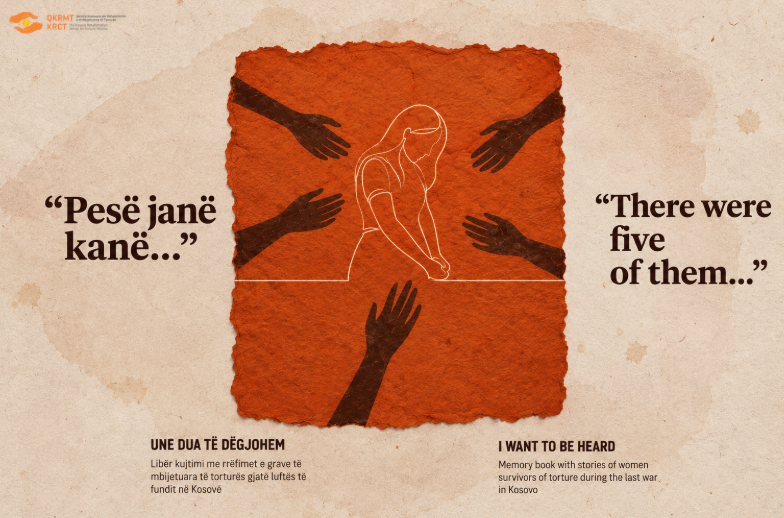
THE STORY OF SEPARATING FROM THE CROWD
H.A. does not find it easy to go out. It is not easy when she meets glances. It is not easy, especially when she sees men in uniform. She still suffers from the crime committed against her: a rape that lasted for hours by Serb soldiers and paramilitaries. Five of them she remembers.
The victim who comes from a village in Kosova tells how women were separated from other civilians who were forced from their homes, and were held the entire night, raped several times.
A mother of three repeated three times during an interview all the details of the most difficult night of her life, after which she says she does not understand why she continues to live.
Apart from being raped, the witness has also been physically assaulted. Most of the time she had been unconscious.
She tells how many times she gained her consciousness and was helped by no-one. She had been awaited by insults and successive kicks by soldiers, whenever she attempted to regain her conscience.
She was not alone. The victim says the entire house in which the crime happened, was filled with other women, who were then released together. She did not keep the events of that night a secret. Her husband, who during the war had been a KLA fighter, needed two weeks to abandon the idea of divorce.
“… they did send us there. I had lost my conscience. They took us and then came over us, and did whatever they pleased. When I regained my conscience, I could see that there were five of them.”
First Person Narration:
THERE WERE FIVE OF THEM
H.A.
I was born in a village back in 1960. Born into an average kind of family. I did the first five grades of schooling. My marriage was an arranged one. My husband was three years older than me. He went to Germany right after we married whereas I stayed here in Kosova. But he came back, he couldn’t stay there. When he came back, the war broke out. My daughter was just a baby when it started.
The first day the war came to our village I was having breakfast. We simply found ourselves under their fire. We came out to see what was going on. The village was full of Serbs. And they expelled us from our home.
We went to another village. We moved for two nights in a row. Then we decided to try and return to our own village. Then it continued like that… with sufferings.
I was holding my little daughter in my arms, and carried a backpack with some clothes for her. The other children were holding to my garments. We moved from one village to the other. In the beginning of the war we would not go very far. Not in the first attack. When we went back home, it was burned down to the ground. But we stayed in our own houses like that until the second attack started.
When it did, we went to another village again. When we got there, their armed forces found us and assembled us all in one field. They were shooting in our direction. Then they had us all walk to another village and then brought us towards the city. As we came out of that village, the Serbian forces started to take us women and put us aside. They brought vehicles and made us enter them. First they would take us one by one, then in the next village they put two in each. They would return some, and come back and collect others. When they pulled me from the crowd, I had my baby in my arms. They threw her away on the ground. I tried to pull back from their grip, and then three or four other Serbs came on to me. One of them kicked me in my stomach, they got my arms, dragged me and put me inside the car. Then they took us to a place and distributed us in two different houses. They came back to take us in the evening and sent us to another house.
They took us and then abused us. I lost my conscience. To this day, even when I see our own army and their vehicles, I look at them and I tremble from fear. It looks to me as if they will grab me and put me inside their vehicles.
Yes, they did send us there. I had lost my conscience. They took us and then came over us, and did whatever they pleased. When I regained my conscience, I could see that there were five of them. I remembered two of them that had pulled me inside that house, but then there were five of them. Nobody came to our help. When I saw them, I started to scream. One of them grabbed my arm and said in Serbian, “Get up, nothing happened. It’s not a big deal! Get up!” He pulled my arm and lifted me up. Then they started to hit me. I sat down and pulled my arms over my head, and they kicked my arms. They would not stop kicking me.
I was alone in that room but there were other women in other rooms. In the morning they left us on our own. The ones who released us were soldiers. And they would give away things like a liter of oil or shoes, or something like that.
I had a sweater, and a jacket. I put them and came out. The weather was all torn but I managed to tie it with a string and that’s how I came out. They had torn our clothes to undress us, and all I could find was that sweater.
They released us as a group and we came back together. We found our family members crying, they had thought that we had been killed. We did not dare tell anyone what they had done to us. We said that they beat us up really badly, but nothing else. I was so shocked from the rape and the kicks, I did not even recognize my own children when we came to them. I just remembered how they threw away my baby. And we came together and stayed there together until the end of the war.
During the war my husband was in the mountains. He was with the KLA. We only saw him very rarely. He would come at times and bring food to us.
I was so exhausted physically, I couldn’t stop thinking what had happened to me. I kept thinking how they threw away my baby. It would be so much better to have died than have to go through all of that.
My husband would not accept it initially
I told my husband later, when the war ended. Nobody else knows. I thought to myself that he might learn it from others, so it is best that I tell him myself. So the war ended and we came back together, in our burnt down house, without anything to our name. So I had to tell him. We sat down and I told him what had happened. “People are talking about how they collected women and raped them.”
I was so embraced to tell him. Ever since the war ended he would see me cry constantly and he would ask me, “What is it? What’s wrong? Why are you crying?” He would try and console me saying “The children are OK, we are OK, we’re all alive, why do you feel so sad?” he’d say. “Why?”
I’d say, “How can I not worry? Can’t you see we have no house? What food can I cook for the children?” I was trying somehow to avoid telling him, and answer in a manner that won’t make him suspect me. And then he spoke about some other case of rape, and I started thinking that he might have heard about my case too, that someone might have told him. So I sat down and told him what I had experienced. I said, “I really am sorry for being one of them raped women. You can do as you please, but that’s what happened to me.” They burned us with cigarette buds, they have kicked us and stepped over us with their feet. I had bruises until very late. I said, “I was myself a victim of rape.”
“What?” he asked surprised.
“I was raped,” I said.
He said, “Get your things right now and go back to your home. You’ve been in the hands of Serbs; they did as they pleased with you. You are no good for me, and I can no longer be with you!”
People started to talk
So our life continued. Our little daughter grew up. But people started talking, and the circumstances in the village were such that we could not continue to live there anymore. So we left the village and moved to a city. But when we went there, we were tenants. It was not our own property. Then (sighs)…
Well they started to talk about things in general. My husband said to me that they say it to him too, “Your wife this, your wife that.” So he thought it was best to leave the village altogether. And we went and started to rent in the city.
It has been very difficult ever since that day. I say to myself, “My God, I hope nobody sees how we are made to live here.” I feel very bad. But nobody knows here apart from my husband. But when I go out on the street I feel as if everyone is looking at me.
To other women who experienced the same I’d say: find some strength to overcome it and live on. Don’t use me as an example. They should not stress like I do. And the most important for me is to catch those who have done those wrongdoings. And give them the deserved punishment. But to this day none of them got what they deserve. I, for myself, feel terrible. I feel worthless, really awful. I go out, and when I walk, I think to myself, “My God, why am I living?” I see a vehicle of our own army, our own police, and I think it is them. I get goosebumps all over my body. Before I started to come here and open up to speak, I would not dare go out at all. It is really hard. (sighs)
The book “𝐈 𝐖𝐀𝐍𝐓 𝐓𝐎 𝐁𝐄 𝐇𝐄𝐀𝐑𝐃” was created through the collaboration between Integra, forumZFD – Kosovo Program, and KRCT – Kosova Rehabilitation Center for Torture Victims
English
To read the full book, click here.
Shqip
Për të lexuar librin e plotë, klikoni këtu.
RRËFIMI I NDARJES NGA KOLONA
H.A. nuk e ka lehtë të dalë në publik. Nuk e ka të lehtë sa herë që ndeshet me shikimet e njerëzve. Nuk e ka lehtë sidomos kur sheh njerëz të uniformuar. Atë, ende e mundon krimi i kryer mbi të. Një përdhunim që ka zgjatur me orë të tëra nga ushtarë e paramilitarë serbë. Pesë prej tyre i mban mend.
Dëshmitarja që vjen nga një fshat i Kosovës tregon mënyrën se si gratë u ndanë nga civilët e tjerë që po dëboheshin nga shtëpitë, dhe u mbajtën gjatë gjithë natës, duke u përdhunuar disa herë.
Nëna e tre fëmijëve brenda një interviste ka përsëritur tre herë të gjitha detajet e natës më të vështirë të jetës së saj, natë pas së cilës thotë se ende nuk e kupton se pse po vazhdon të jetojë.
Përveç dhunimit seksual, dëshmitarja është dhunuar edhe fizikisht. Në shumicën e kohës ka qenë e alivanosur.
Ajo tregon se sa herë ishte këndellur nuk i kishte ndihmuar askush. Britma ushtarësh dhe goditje të njëpasnjëshme ka përjetuar sa herë që kishte bërë përpjekje të këndellet.
Nuk ka qenë e vetme. Dëshmitarja thotë se, e gjithë shtëpia ku është kryer krimi ka qenë e mbushur me gra të tjera, me të cilat pastaj është liruar në grup.
Tregimin e asaj nate kishte arritur ta mbante fshehtë… Burrit, që gjatë luftës kishte qenë nën uniformën e UÇK-së do t’i duheshin dy javë, që të hiqte dorë nga divorci…
“…na kanë çu aty, unë jom kanë pa vetëdije. Na kanë marrë, na kanë majtë ka dy ka tre, kanë bo çka kanë deshtë me neve… Kur m’ka ardhë vetëdija, kur kom kqyrë, pesë ishin kanë.”
Rrëfimi në vetën e parë:
PESË JANË KANË…
H.A.
Unë jam e nji fshati, e lindun me 1960-ën. Kam lind në nji familje mesatare. Shkollimi jonë dej n’klasë t’pestë. Martesa jeme o’ kanë me msit. Burrin tri vjet përpara e kom pas, edhe jena martu. Ai mas martese ka shku n’Gjermani. Unë kom nejtë n’Kosovë… Po u kthy, s’ka mujtë me nejtë. Tani kur u kthy ai, veç filloi lufta. Unë e kam pas çikën bebe kur ka fillu lufta.
Kur ka nisë lufta e parë mrena jem kanë t’u hangër mëngjes. Edhe veç e kemi ni që kanë gjujtë. Nuk kom pasë… nuk kom ni shumë, kurgjo. Kur jemi dalë, kemi kqyrë, plot serbë ish mbushë fshati. Edhe na larguan prej shpijave. Dulëm me nji fshat tjetër, dy netë qashtu. E u kthyem apet n’fshat tonin ma. Tani ish gjithë qeshtu… me vujtje.
Unë çikën e kom pasë n’grykë, nji çantë n’shpinë me tesha t’çikës t’vogël. E të tjerët, për xhepa na u vjerrshin fmia. Prej fshatit e n’fshat. Jo qaq larg, n’fillim t’luftës jo. N’ofenzivën e parë jo, nuk o’ kanë qaq larg. Tani jemi kthy n’shpi, e
djegne shpija krejt, me temel. Edhe kem nejtë qashtu deri kur ka fillu ofenziva e dytë e luftës.
Kur nisi ofensiva e dytë, jemi shku me nji fshat tjetër apet. Kur jena shku n’fshatin tjetër, na kanë mbledhë tanve me nji arë. Janë ardhë forcat e armatosuna e na kanë mbledhë me nji arë, tanë n’vend. Na kanë qitë në nji arë. Kanë gjujtë n’drejtim tonin. Tani na kanë marrë krejtve edhe na kanë dëbu prej fshatit n’nji fshat tjetër… Edhe na kanë pru n’drejtim t’qytetit. Kur fillumë me dalë prej atij fshati, na kanë nisë me na marrë neve grave forcat serbe. Me kerre, me motora rrugës, nja ka nja… na kanë marrë na kanë shti n’kerre…
Njihere ia kanë fillu nja ka nja na kanë marrë, tani t’u kalu n’tjetrin fshat, ka dy na kanë marrë. Do na çojshin, u kthejshin i merrshin apet t’tjerat… E kom pas çikën e vogël n’dorë kur më kanë ngrehë prej kolonës, ma kanë gju prej dore n’tokë… çikën. Unë kom tentu mos me shku me ta, e tani m’kanë kapë tre a katër, nja ma ka hi shkelëm, m’kanë kapë për krahve, m’kanë ngrehë zhag e m’kanë shti n’kerr. Tani na kanë pru këtu edhe na kanë shti me dy shpija. Tani natën na kanë marrë… na kanë marrë me kerr e na kanë çu n’tjetër shpi.
E na kanë marrë, e na kanë maltretu, mu si m’kanë marrë jam kanë pa vetëdije. Sot si t’i shoh ushtrinë tonë, kerret e ushtrisë tonë, veç i kqyri. Krejt trupi, shpirti m’lëshon. Më duken se po m’hypin mbi kerret…
“Edhe na kanë çu aty, unë jom kanë pa vetëdije. Na kanë marrë, na kanë majtë ka dy ka tre, kanë bo çka kanë deshtë me neve…”
Dy janë kanë, deri n’pesë. Kur m’ka ardhë vetëdija, kur kom kqyrë, pesë ishin kanë. Dy e di, mrena shpisë m’kanë shti, tani kur kom kqyrë, pesë ishin kanë. Nuk na ka ndihmu kërkush. Si i kom çelë sytë, i kom pa se pesë ishin kanë. Si i kom pa, veç kom piskitë. M’ka kapë për krahi m’ka thanë, “Çu se kurgjo nuk o ba! Çu!”, m’ka kapë… Serbisht. Veç m’ka kapë për krahu edhe m’ka çu. I kom çelë sytë edhe i kom pa. Tani jom ulë e m’hishin krahëve me shkelma. Une e ulun e ata m’pucatshin me shkelma edhe…
Bashkë me tjera na kanë marrë n’dhomë, nja ka nja na kanë lanë. Unë vetun jom kanë n’dhomë amo n’shpi ka pasë edhe femna tjera… E tani n’mëngjes na kanë lshu vetë. Edhe kur na kanë lshu, ushtarë ishin kanë… ata si na kanë lshu ushtarë ishin kanë. E na i dhajshin, dikujt nji litër zejtin, dikuj i dhajshin kpuca, dikuj qeshtu diçka edhe jemi dalë, edhe tani kena nejtë edhe sa muj aty.
Veç jom mbështjellë. Nji xhemper e kom pasë me dy kqej, njifar jakne. Amo e kom pshtjellë, e kom lidhë me nji tojë xhemperin qeshtu edhe kom ecë. Se bluzat qa i kena pasë, krejt na i kanë pre, përveç qai xhemper ish kanë. E kom veshë bythëprap atë bluzën si e kom pasë, n’anë t’shpinës e kom vesh.
Kur jom dalë prej shpije, na kanë lshu thuje grup, edhe jena ardhë. Tani familja jonë t’u i kajtë, t’u menu se na kanë mbytë krejtve. S’kemi guxu kërkujt me i tregu. S’kena mujtë me folë me kërkan kurrë. Ju kemi thanë se na kanë rrehë, na kanë maltretu… Kam qenë qaq e maltretume sa nuk e kom njoftë fminë tem… Non stop mu kujtojke qysh ma gjujtën çikën n’tokë… E kena nejtë, aty jena bo bashkë dhe kena nejtë aty deri kur ka përfundu lufta.
Gjatë luftës burri u kanë n’mal. I veshun. Rrallë e shihshim. Veç kur na bijke bukë…
Fizikisht jom kanë shumë e lodhtë edhe pa vetëdije. Ka pasë moment kur kom mendu se çka me ka ndodhë… fmija prej dore m’ka ra… Për mu njiqind herë o kanë ma mirë me vdekë n’qat minutë se me m’u kthy apet e gjallë…
Burri në fillim e priti keq
Burrit i kom tregu mas… kur ka përfundu lufta, tjetër kush se din. Thashë i tregon dikush tjetër, e ma mirë t’i tregoj vet. Edhe përfundoi lufta, u bonëm apet bashkë, pa shpi, pa kurrgjo. Qysh mujtëm. Edhe o dashtë me i tregu. U ulëm e i thashë, kështu ashtu osht’ puna. Ai tha, “Lehtë po thojnë bre, i kanë marrë do, e i kanë… qeshtu i kanë përdhunu do femna, i kanë marrë e i kanë malltretue”.
Une kurrë pa mujtë me folë me to… Kur ka përfundu lufta me pyetke “Çka u bo?”, “Çka ki?”, “Pse po nihesh kaq keq?”. Unë gjithë tu kajtë… “Po fmia kanë pshtu, vetë kena pshtu, e pse kështu kaq keq po nihesh?”, m’thojke “Pse?” I thojsha, “Qysh mos me u mërzitë? A po e sheh që s’po kena shpi? Çka me ju bo fmijëve?” U munojsha diqysh, diçka me ja largu veç mos me dyshu n’mu. Edhe tani, kur po flet për dikan tjetër, tha qeshtu e qashtu, thash se e din edhe për mu, i tregon dikush. I thash, “Qe une, kështu, kështu osht’ puna. Bash unë jam… I thash, “po m’vjen keq, edhe unë vetë që jom. Ti qysh dush bonja, qe ku jom une vetë. M’u qashtu m’ka ndodhë”. E na kanë sosë me cigare, e na kanë shkelë n’kamë me themrat e veta. I kom pasë njollat deri vonë. Tani n’kamë, se m’kanë pasë shkelë. I thash “unë vetë jom kanë”.
Tha: “Çka?” Thash, “Une vetë jom kanë” Tha: “Menjiherë me u bo gati e me shku n’shpi tane! Ti për mu nuk je… T’kanë marrë shkijet n’dorë, kanë bo çka kanë deshtë me ty. Unë me kanë me ty, jo!” Thashë, “Mirë! Qysh t’duash bonja. Une t’kallxova, që unë s’di çka me bo tjetër. Me qef nuk jena shku. S’di çka me bo!” E t’u kajtë e t’u piskitë. Mu m’u dhimshin fëmija. Nuk dijsha çka me bo…
Edhe hajt qashtu kalunë nji javë ditë… Dy javë gati u bonën edhe veç e kuptoi, tha, “Uh m’fal, se unë tu kokna kanë gabim, se unë s’kom mujtë me t’mbrojtë e ti s’ki çka me bo”.
Filluan me folë njerëzit
Edhe tani qashtu e kena vazhdu jetën… Tani çika e vogël u rrit… S’di qysh edhe prej fjalëve, prej rrethanave në fshat të burrit, tani ma nuk mujtëm me nejtë aty. Fillunë me folë njerëzit. Edhe na e lamë fshatin tonë e dulëm në nji qytet tjetër. Kur dulëm atje, n’shpi t’huaj. Tani (psherëtinë)…
N’përgjithësi, n’përgjithësi. Kanë fillu n’përgjithësi me folë. Burri më tha: “M’thojnë edhe mu, gruaja jote kështu e kështu. Ma mirë po e lëshojmë fshatin krejt. Edhe jemi dalë n’qytet aty n’shpi t’hujë kemi jetu, si ma zi.
Tani sot e asaj dite, shumë e randë, shumë… Sot thom, Zot, s’osht’ me jetu për neve, me na pa dikush”. Shumë keq, shumë randë e nij vetën. Ama, përveç burrit, këta nuk e dinë. Veç vetë si t’dal n’rrugë m’duket se tanë po m’kqyrin.
Kisha mujtë femrave tjera që e kanë përjetu me ju thanë, veç me pasë forcë e me mbijetu. Mos me pasë tanat për shembull stresin tem. E çka o kanë ma kryesorja, me i kapë ata si kanë bo kështu. Me i… me e marrë denimin e meritumë. Ama deri sot hala kërkush… s’e murrën dënimin se e meritojnë.
Unë për veti, shumë e ni vetën llom, shumë keq. Shumë e pa vlerë, shumë randë e ndi vetën. Eci, dal, thom, “O Zot, pse po jetoj?”. Nuk muj, njikerr e shoh t’ushtrisë tonë, t’policisë tonë, m’duket se ata janë. Kështu që m’rrënqethet tanë trupi.
Ma deri pa ardhë qetu me folë nji trohë, s’guxojsha hiç me dalë. Zor shumë (përshpëritë).
Libri “𝐔𝐍𝐄̈ 𝐃𝐔𝐀 𝐓𝐄̈ 𝐃𝐄̈𝐆𝐉𝐎𝐇𝐄𝐌 ” u realizua përmes bashkëpunimit mes Integra, forumZFD Kosovo Program dhe Qendra Kosovare për Rehabilitimin e të Mbijetuarve të Torturës – QKRMT