
WRONG RETURN FROM SWITZERLAND
It had never occurred to Teuta that she would one day experience what she’d only witnessed on TV during the mid 1990s. With her boss’s wife, she would watch stories about the Bosnian war that was going on at the time. Teuta used to live in Switzerland then. A few years later, her husband decided to return to Kosova to join the KLA. Teuta followed her husband’s wish.
Yet, returning as a pregnant woman turns out be the worst decision of her life. She experienced atrocities that came to be known as the two offensives of the Serbian army in the villages of Kosova. She had to live in the open in mountains, dodge shooting, be wounded by a grenade, sexually abused and expelled from home, while being with her family and friends most of the times. Her five young children follow their mother in what could be assessed as months of facing inhuman atrocities.
Teuta was wounded on her leg and breast from two pieces of a grenade thrown on a row of civilians who were walking under a death threat: the one to stop moving would be killed. A bit later she would see the horror by those she calls Seselj’s paramilitaries, who rob her of her possessions. Others, she calls Arkan’s paramilitaries, behead an infant to terrify the fleeing women.
“You knew whose paramilitaries they were from the name they’d shout; ‘long live Seselj’ or ‘long live Arkan.’ Arkan’s men were masked, Seselj’s had long coats,” Teuta explains. Together with 50 other women Teuta is raped a few weeks before the war ends, in a factory where she was held for several hours.
They had all the tools for massacre. They took a two-year-old boy from his mother and one of them placed his knife over his throat. “I’ll have a soft touch, I have a soft touch, don’t you worry!” he’d shout. Children cried and screamed.
First Person Narration:
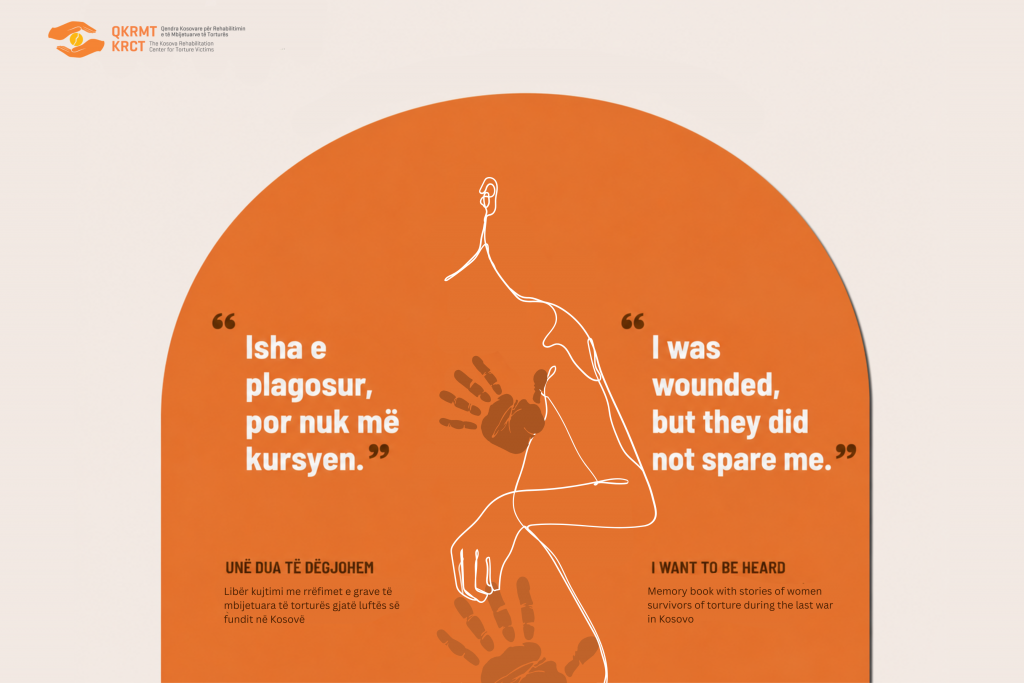
I WAS WOUNDED BUT THEY DIDN’T SPARE ME
Teuta
I am a married mother of five. I have many brothers and sisters. I have good memories; many of them. My parents managed to school all of us girls, so we all finished school.
The best moments were those of Eid. We’d grab our music instruments, sing, go to houses and help brides dress up. Such a pleasure it was.
I got engaged and then married six months later. We had our wedding and then we had to move to Germany. So, I went there and lived with my husband. I worked together with him there.
For five years we stayed in Switzerland. I was pregnant when we returned to Kosova. I worked there looking after the five daughters of our boss, and my husband worked for him too.
We came back for holidays, I was pregnant that year. When we came back it was 1992-93, and the war was raging in Bosnia. I would watch the events from that war on TV with my boss’s wife. I would get up from my seat, I remember, as I would get goosebumps in my entire body. The boss’s wife and I would both cry while watching the events in Bosnia. I never even imagined I would experience the war in Kosova myself.
I never even thought of it. I could not watch the events on TV from crying, so with my boss’s wife we’d go out often, taking the kids for a walk as we didn’t even dare to watch the war on TV. So we decided one August and came back to Kosova, as nobody even told us what was going on there. As the time approached to leave, I noticed my husband coming back later from work in the evenings. I was pregnant and already had two children, my daughter and my son. He would be late and I would wonder what he was doing. We would have the “Rilindja” newspaper at the time, and I was quite fond of reading. When I saw “Rilindja” announcing that the war in Kosova is on the verge it was 1997. That’s when I started to fear. I would see that the men would assemble during the nights, and my husband had put on the KLA uniform.
I said to him that I would keep the children and move on, as my father-in-law had also instructed me to do so. My husband disagreed, saying we should all die for our homeland.
I gave birth. I gave birth under a candle light as there was no doctor. There were no movements allowed from the Serbian troops. That’s when a massacre was done.
That’s when the war started for me. It was the moment I gave birth and I was staying indoors for three weeks. Three weeks with the little children and the baby not knowing where my husband had gone as the army would not allow him to return home.
And then we’d move from one village to another. The nights belonged to us, the days to the Serbs. They would not dare move by night and they would assemble in their collection points. The daylight belonged to them.
It rained a lot, with hale even. We had nothing to eat. Our tractor had no more petrol; it got stuck. All our belongings were left on that tractor. We started to walk. It was only us women and children. We moved on foot, came and hid inside a stable. The military spotted us, observing our moves. They had seen that the infantry is moving downhill to enter the houses. So they waited until it was dark, they imagined that no movement would be going on during the night. We closed ourselves inside a stable and when we got out to pull out some water from a well, we heard many footsteps approaching. So we started to cry, as we knew that where they would find the weak few, they would slaughter everyone. We all started to cry and the young girls where screaming. Fortunately, it was our own army. They had come to help pull us out of there. We were helped that night, and managed to get away. We slept in another village. In the morning the soldiers brought us cooked wheat as we and the children had eaten nothing.
The children would not want to eat the cooked wheat without sweetening it up. The soldiers had cooked it as they had no flour. They said to us, “We are trying to get a tractor to load you on it and get you out of here.” We were quite a few. We fit on two tractors and set off. On our way towards the border we heard the automatic rifles shooting above our heads. A bullet hit the tractor wheel and it went flat. We knew it was the Serbs shooting. The tractors stopped and the drivers ran away. We moved our children towards the woods and our army men totally withdrew, as the Serbs were approaching with tanks.
We stayed in the woods for three days and three nights. We would have to press on our children mouths hard as we saw below us many automatic guns and gulinovs. The infantry would then move and start shooting and shooting until it would get dark, they would try to clear the grounds. The tanks started to approach and the ground was trembling from them. The infantry soldiers climbed over those tanks and headed towards the village. We saw what way their offense was advancing, so we spent that night, and the other, and the other one after that, inside those woods.
We were dragging our children and headed towards another village.There we gave them something to eat and drink from what people who had abandoned the village had left behind. They had had some beans, and some bread loafs were still fresh, as they had run away upon hearing the automatic rifles. We had something to eat and then at 5a.m. we moved on. They moved us on with another tractor from there. They sent us to stay with my family but there were many refugees who had sought shelter there already. They had finished their attacks on those sides and would not return this way anymore. But this was just another of their tactics, and they had burned our house destroying all of our possessions.
The fiercest attacks started after NATO had agreed to start bombing them. We were in a stable and could not even get our own children; you did not know what direction were the bullets coming from.When they started with the attacks that day in March, they then assembled us all. They would even find us in the mountains hiding and assembled us in the village school. All of us women with our children were there for three days.We went out to look for flour in the neighboring houses. We did manage to bake some three loafs of bread, but it was not baked properly, it was more like dough. I had to eat something in order to be able to breastfeed my baby. I had no milk in my breasts, and my baby was crying of hunger. When they came they even took away from us the bread we had managed to prepare and kicked us out of the school.
Seselj’s paramilitaries came and then Arkan’s. The first ones were Seselj’s. We knew which ones were whose as they would shout out loud “Long live Seselj.” Those that shouted “Long live Seselj” wore long coats. They were looking for golden jewelry. I had my golden jewelry with me as my husband had instructed me not to leave it home and that I should have it just in case.
Arkan’s paramilitaries were utterly crazy. They all wore masks; their heads were all skin shaved and they all wore some scarfs over their heads.They had all the tools for massacre. They took a two-year-old boy from his mother and one of them placed his knife over his throat. “I’ll have a soft touch, I have a soft touch, don’t you worry!” he’d shout. Children cried and screamed. My baby was sick and I had no milk to feed her, I had nothing to eat and I knew my baby was going to die. Then they came in-between women and girls and started to kick us all. Some of them they pushed into houses, to make sure if there were any KLA fighters inside them. That’s when they separated about 20 of us, they dragged us all behind the school yard kicking us on our chests.
There they undressed us and collected our clothes so as to set them on fire. When they sent us behind the school yard, there were young girls there, there was an elderly woman of at least 65, and even pregnant women. They undressed us all, had us lean against the wall naked facing it, and then they started to rape us. A girl was crying and screaming very loudly. My mother-in-law then spoke and asked them to release me. Some of them were a bit nicer, some were meaner. One of them asked “which one is your daughter-in-law?” My mother-in-law called me to approach her. Three women who were closer to her ran before me saying “It’s me, it’s me.” But my mother-in-law said “it’s neither of them.” “I am her daughter-in-law,” I said and then they hit those girls with the back of the rifle on their knees and they fell on the ground. I picked up the clothes of another woman and quickly wrapped them around my body so as to face my mother-in-law. Then some other women gave me some clothes, and later we all joined the row of some women moving. And I thought that was it, and I was saved. I was saved, I thought.
The women who were left there behind the school yard were never found and to this day nobody even knows where their bodies are buried. So we joined the row, and were made to sit down with the face against the soil. They were firing on every side. That’s where we were until late in the evening when more Serbs joined, and they started to sing. They all had long beards; they had assembled lambs, sheep, they were singing their Serbian songs and whistling. Many things they had stolen they had hanged on their tanks; the golden jewelry was hanging from their tanks. They made us keep our heads low, and they lead on their tanks while we walked behind them.
They would constantly hit us on our ribs with the back of their rifles. I was carrying my baby in my arms. One of my children was holding the hand of my sister-in-law and the other I was holding with my hand so as not to lose them in that row of people. We started to move with my children, my mother-in-law and my sister-in-law. When we arrived at a village they separated all of the elderly men. They killed 13 old men in front of our eyes. One of them was saying “Look carefully and see which one is your father!” They would select the poor old men, make them kneel and shoot them against their head. Then they had the women who were pushing their mothers on a wheelchair, as they could not walk, move them to the nearby woods and then went to the woods and killed the old women. And then they would leave those dead women on wheelchairs inside the woods, or they’d kill them and then push the wheelchairs down the wood. We started to move on and then a grenade fell and exploded in front of us. Many died; I saw beheaded women, women with no legs or arms. Then I noticed I had also been wounded by a part of that grenade, and saw that my daughter was also bleeding in her face. I was hit on my breast and my leg.
When I saw my girl bleeding I said to my mother-in-law, “My daughter’s been hit by the grenade”. They would look at the people who were wounded and could not move anymore and they put them on the side in order to then kill them. My mother-in-law said, “Walk and don’t even turn to see your daughter as they will kill you and your baby too.” How could I walk though; my leg was bleeding. I asked my mother-in-law to hold on to my baby, “I’m shaking and cannot walk any longer, you hold the girl.” Other women gave me some dippers to cover my baby and they tied up my leg so as I could move until we went to the city. On the way my mother-in-law said “You know… your baby is dead!” “What do I do now, where do I leave her?” I asked. I was wounded, and had a wounded leg. There were still some policemen and some soldiers, from the regular army, but the ones wearing masks were the ones who did the killings. I took my baby and put her down next to a mill. I never want to go to that mill again in my life. When I did, this Serbian uniformed soldier goes to me “Don’t leave it there; a dog might eat it.” He was himself yelling to me “Don’t leave it!”, barking like a dog, “Take it!” he’d say in Serbian, “Take it!” So I picked her up. When we approached the city they threw us into a valley and there they separated us and shoved us up into a factory. They had about 130 people inside that factory, and we did not dare see where they are taking the rest, as we were to stay inside that factory. My mother-in-law took off her coat and laid it down for me. She kept it at it was cold. Women came to me and catered to my wound. They found some scissors and removed the part of the flesh that was infected. Then they put some flour on it so as to stop the bleeding and then tied up the wound. It got somewhat better. As for the breast, I could not do much; I just could not stop my bleeding, as I was breast-feeding my baby and she wanted to suck on it. I started to feel feverish, my temperature raised.
Some women found me some milk and I gave it to my baby trying to wet her lips. She started to open her eyes, she had been alive. And we stayed there for three nights, while I was very sick, yet my baby started to get better. There was a doctor there to whom I am grateful for as long as I shall live.
All of the Serbs were assembled in front of the factory and they had captured a lot of young men. They would jump over their bellies with both feet, beating up our youngsters. The blood was screaming downwards. If they would hit someone with the back of their rifle, the victim would give away their watches, and even the gold those the young men had. They would kick them and load them on trucks. We the women started to cry and scream. A Serbian guy approached and he beat up an old man. He also attacked and beat up a young girl, just because she had short hair. “You KLA huh?” he said to her and beat her up in front of us all. Then they yelled at us for screaming and they put us all inside again.
They put us all inside and I thought they were going to take away all the young men as they were loading them on trucks. I thought they will take them and go away. When we got inside, two of the shorter men came in and said to us “Leave your children and come out!” But we all got out with our children as we did not want to lose sight of them. I did not want to accept parting with them, so I held them tight against me and thought to myself “Let them kill me together with my children as I will never leave them.” You understand at that point that children are the core of your own soul.
We started to cry there and they said to us, “We have killed your husbands and burnt your houses. What else are you waiting for? Why are you not on your way to Albania yet?” “You killed our husbands and destroyed our homes but I will not let go of my children. Kill me with them.” He took away his gun and then I saw some children coming out on their own, of mothers who let them out on their own. He was very upset that I came out with my children, that he slapped me so hard on my ear that I had hearing problems for a longtime.
They beat me up and took away my children, and the children started to come out. We were 130 people, 50 of us they separated inside that place. They took the children out. We lost our minds, cried and screamed so hard, I will never forget those sounds (sobs). And then we saw so many soldiers and masked men with guns, knives and screwdrivers. They held their tools against us and then a big guy wearing a mask came in. He had a golden tooth. He yelled at us “In less than one minute I want you undressed. Take off all the clothes! I will not wait! Start undressing immediately!”
We were about 50 women inside, out of a total of 130 people. You cannot imagine all of the screaming and crying. We did not know which one to console. We did not dare approach any of the other women. They were beating them up. They undressed us forcefully, they would cut out bras with their knives to take them off. They brought a knife against my chest (sobs). I was wounded on my leg and breast, but they did not spare me. My breast was bleeding. I lost my conscience. Later when I came to my senses I remember only that I had two of them on top of me. One was holding me and the other one was… doing his thing.
All of us women lost our minds. They continued so for like two or three hours and never opened the doors. And outside there were our children and older men and women. They would hear our screams. The women there were all in one way or another known to one another. I had lost my conscience and remember almost nothing, I just recall that when those from outside came in, my mother-in-law threw a blanket at me. They took some of the women with them, 30 remained inside and another 20 were taken away. When those from outside came in, my mother-in-law came to cover me. My daughter was five at the time and she recalls “Mum, you were all screaming and crying inside.” Then women started to wash up with some warm water. It was difficult to find water at that time. We stayed there for another week and they were always nearby somewhere. We were constantly under their surveillance. They returned the next day. The next round started the next day. I climbed the attic with another young girl, and we were saved in the attic. We did not go down until it was all finished and they were gone.
Then old women came in holding what they could find from the houses, and covered us. They were trying to make us some food, so as to feed us, but it was difficult to help the women. Then they brought in some doctors to try and help with our wounds.
We remained in that factory for another week as we had nowhere to go; we did not know if our sons were alive, and if anyone had died! We went out on the valley; we sat down and cried as we were so scared about our fate. During that week we buried a total of six children as they all died out of starvation. We would dig a grave deep enough as to fit the small bodies. Then we would go out and cry over those graves.
After one week I saw my brother and my husband coming down from the mountain towards us. I was so embarrassed to come in front on them. They had heard what had happened to us but they said not a single word about it. My brother came first, then some of my cousins who were now wearing a uniform, and then my husband. Then my mother-in-law said to me, “Say nothing, let them see with their eyes that you have been beaten up, as other women will also say they were beaten up”. And that’s what we decided to say to them, that we were just severely beaten up. But I thought to myself, he may learn it today or he may learn it later. Let him know here and now and let him decide while I am still here. Though we were both there, I had difficulties recognizing him, knowing if he was indeed my husband or not. When he approached he looked at me and the others afterwards. I wasn’t the only one in that state, all of us were. Each one of us looked sick and exhausted.
I approached and hugged my husband, my brother, all of my cousins who had managed to get alive from the war. My husband asked, “Are you safe?” “We’re safe”, I said. He embraced me again and asked “Where are the children?” We were all gathered there, but I pulled my husband to the side and told him exactly what had happened to us “So take me or leave me” I said to him, “this is what they did not just to me, but all of us.” He said he knew it, and added “You will be my wife the way you have always been.” He was very supportive.
KFOR forces then entered, but I did not se them as I had lost my conscience. I thought to myself “Here it goes again.” My husband and mother-in-law suffered from my attitude later. I just could not love anyone anymore. I just could not adapt to life anymore; my life had been destroyed, it was not as it had been before the war. For a long time I even had problems sleeping. I would go to sleep, and then in the middle of the night I would wake up, get up, thinking I have to hide, they are coming, they are coming in, I would scream in my sleep and wake up crying. Everyone saw I was going through hell. My father-in-law was also aware of it. We were trying to rebuild our lives, but I simply had no will, in spite of having my children. I went to the garage to hang myself; my father-in-law found me. He removed the rope from my neck, “What are you doing my daughter? What is it?” I was emotionally very disturbed.
I did suffer a lot after the war. I was psychologically imbalanced for at least three years. I was taking antidepressant pills.And then from 2008 on I am very thankful to this NGO in which we are discussing. I must have been so closed down inside myself, but now I feel much better. That year was my first time narrating about my experience of the war. And there weren’t just two or three other women there… there were many who told others about our experience of the war, as there was nobody to stop us talking about it. When I first spoke about those things I did not know I would be talking about it again. When I came to the association for the first time. My husband encouraged me, “Other women are going, why don’t you go too?” he said. There were many of us, about two dozen women coming up together and speaking about the experiences of the war.
I started to notice the change after I spoke. I started to find people more accepting towards me. At times it seemed that I no longer felt anything about what had happened to me. And for the last two years now I am getting on much better with my husband. We are getting along fine. I sense that I feel closer to my husband because I never wanted to be intimate with him… and he was very understanding. He is a very reasonable person, a very quiet one. I am very upset myself, and whenever I get upset, he calms me down, he speaks softly to me “Let us go out for some fresh air, for a walk. Come! Why worry? There is nothing to get upset about, my love. Why worry? The war’s over, finished, it is to be forgotten. We need to look towards the future, the children, the family.” He is such a quiet type, and I am thankful to the Lord from the bottom of my heart for having such a husband.
Today, the best thing I expect to happen to me is to see that my children get schooled. I just want them to finish the school, find employment and pray that this thing does not repeat. God willing it never happens again. Oh dear God I beg of you! And what I have hoped for I see is gradually coming to life. Surviving all of that suffering was worth it, I see now it was worth struggling and surviving so as to see my children grow up. I am thankful you presented us with this opportunity to talk, I am really looking forward to see the book and read it. I really want to have the book in my hands. I want other mothers in Kosova to also be able to read it so that mothers can read about what other mothers have experienced.
The book “𝐈 𝐖𝐀𝐍𝐓 𝐓𝐎 𝐁𝐄 𝐇𝐄𝐀𝐑𝐃” was created through the collaboration between Integra, forumZFD – Kosovo Program, and KRCT – Kosova Rehabilitation Centre for Torture Victims
English
To read the full book, click here.
Shqip
Për të lexuar librin e plotë, klikoni këtu.
KTHIMI I GABUAR NGA ZVICRA
TEUTA kurrë nuk e kishte menduar se një ditë do ta përjetonte atë që po e shihte në televizor në mesin e viteve të 90-ta. Me gruan e shefit teki cili punonte, ajo po shihte rrëfime për luftën në Bosnjë që po ndodhte asokohe. Teuta atëherë jetonte në Zvicër.
Pak vite më pas, burri do të vendoste që të kthehet në Kosovë për t’iu bashkuar UÇK-së. Teuta e ndjek vullnetin e burrit.
Por, kthimi për shtatzënën do të ishte edhe vendimi më i gabuar i jetës së saj. Ajo do të përjetonte ato që njihen si dy ofensivat e ushtrisë serbe nëpër fshatrat e Kosovës. Do t’i duhej të jetojë në mal të hapur, të përjetonte krismat, plagosjen nga një granatë, dhunën seksuale dhe sërish torturën e dëbimit nga shtëpia, derisa gjatë gjithë kohës nuk ka qenë e vetme. Të pesë fëmijët e vegjël e kanë përcjellë këtë nënë në ato që do të mund të vlerësoheshin si muajt e përballjes me të pa njerëzishmen. Ajo ka pësuar në këmbë dhe në gji nga dy copa të një granate që është hedhur në mes të kolonës së civilëve, të cilët po ecnin nën kërcënimin se kush ndal hapin do të vritej.
Pak më vonë do të shihte tmerrin nga ata që, ajoi quan ushtarë të Sheshelit, të cilët do ta plaçkitnin. Të tjerët që ajo i quan të Arkanit do t’i prisnin kokën një foshnjeje me qëllim që t’i tmerronin gratë që poiknin.
“I dinim të kujt janë sepse thërrisnin: rroftë Shesheli ose rroftë Arkani. Këta të Arkanit kanë qenë me maska, ata Sheshelit me mantela të gjatë”, tregon Teuta… Ajo, bashkë me 50 gra është dhunuar seksualisht pakjavë para përfundimit të luftës, në një duzinë kujané mbajtur për disa orë.
“I kishin pasë krejt aletet e’masakrës. Na e kanë marr nji djalë dy vjeç edhe e rroki me thikë njani prej tyne. E kam dorën e lehtë, e kom dorën e lehtë, mos u tutni, bërtitke. Fëmija kajshin e britshin”.
Rrëfimi në vetën e parë:
ISHA E PLAGOSUR, POR NUK MË KURSYEN
Teuta
Jam një nanë e pesë fëmive, e kam edhe bashkëshortin. Kemi qenë shumë motra e vllazni. Kam kujtime t’mira, kam shumë… Kemi mrri, i kemi shkollu t’gjitha motrat, e kemi kry shkollën. Momentet ma t’mira kanë qenë për Bajram. Kur vike Bajrami i rrokshim defat, knojshum, dilshim nëpër shpija, u veshshin nuset. Shumë kënaqësi. E kom pas fejesën, për 6 mujë jom martu. Kena bo darsëm, po me tre mujë m’ka ra me shku n’Gjermani. Edhe atje kom shku kom jetu me burrin. Atje kom qenë, kom punu bashkë me bashkëshortin. Kena nejt pesë vjet në Zvicërr. Kam qenë shatatzanë kur jam kthy n’Kosovë. Atje kom punu, i kam kqyrë pesë çika t’shefit, burri ka punu.
Jemi kthy me ni pushim, u kon ai vit, jom konë shtatzanë… Po du me lidhë kur kemi qenë ’92-tën, ’93-tën, atje ka qenë lufta n’Bosnjë, e po du me lidhë qetash te Bosnja. Atje kur ka qenë lufta, kur e kom kqyrë unë me grunë e shefit, e kqyrëm televizorin u çojsha prej veni se krejt trupi mu rrënqethke, kajke gruja e shefit, edhe unë shumë kom kajtë kur e pajsha luftën n’Bosnje çka po ndodhë, çka po bohet. E nuk e kom paramendu me përjetu unë vetë luftën n’Kosovë.
As se kom mendu kurrë po nuk kom mujtë as n’televizor me shiku atje n’Zvicërr t’u kajtë, e t’u u largu me grunë e shefit prej shpisë, t’u dalë me fmi t’u i shëtitë se s’guxojsha me kqyrë televizorin. Edhe jemi çu kemi ardhë n’gusht nji pushim, aty s’na ka tregu kërkush se çka osht’ t’u ndodhë n’Kosovë, aty kur ka ardhë koha pe shoh që burri n’mbramje po vanohet. Unë isha shtatzanë, i kisha edhe dy fmi, çikën edhe djalin. U vanojke çka o tu bo… at’here ka qenë edhe gazeta “Rilindja”, se gjithë na kena msu edhe kem pas qef shumë me lexu. Kur e kom pa “Rilindjen” vetëm e kish shkru n’fillim t’gazetës që vetëm sa s’ka kërsitë lufta n’Kosovë, u kon n’97-tën. Edhe aty m’ka hi nifarë frike. E pajsha që natën po bojnë lëvizje. Burriish veshë me uniformën e UÇK-së. Ithash, unë du me i marrë fmitë edhe du me ec, edhe vjehrri m’ka thonë merri fminë edhe shko. Burri ka thonë jo, për atdhe le t’vdesim te toné! Unë linda… Kom lindë me ni qiri se s’ka pasë as mjek. Nuk kishe çka me pa prej forcave serbe. Qat’here ndodhi një masakër. Qaty ku ka fillu lufta për mu, ka qenë qai momenti kur kom lindë unë edhe tri javë i kom pasë që kom nejt n’shpi. Tri javë me qat fminë e vogël e me bebën edhe tani burri nuk kom ditë kah u shku mo se ushtria nuk e ka leju as n’shpi me ardhë. Mandej kemi lëvizë prej një katuni në katunin tjetër. Tu u enë… Nata ka qenë e jona, dita ka qenë e shkive. Se ata natën, kur bijshin n’punkta t’vetë mo nuk guxojshin me bo lëvizje, vetëm ditën. Dita u konë e tyne…
Ka ra shi shumë, ka ra breshën. Bukë nuk kishëm… Traktori mo s’kish naftë, traktori mo met’. Me tesha, me kotesha krejt qaty na kanë metë. Vetëm nisëm me ec. Krejt gra e fëmijë jemi konë. Kemi fillu n’kamë, kemi ardhë, jena mshef n’nji ahër edhe aty kur na kanë pa neve t’ushtrisë në fshat na kanë percjellé gjendjen krejt kah, ku po shkojna na, kah po himë, ku po dalim. E kanë pa që kambësoria po Ishohen nëpër shpija me hi. Edhe kta kanë pritë deri u Ishu terri, po si ulIshu terri n’tokë kanë thonë ata që mo na nëpër terr nuk guxojna me dalë me i marrë. Na jena mbyllë me ni dhomë, me ni ahër edhe aty kemi dalë jashtë me marr ni kofe me ujë prej bunarit edhe i kena ni kamtë tu ec nëpër rrugë trap tap tap fimiton zhurmën). Edhe na kemi fillu me kajtë, erdhëm, se ku e kanë nxonë pakicën e kanë bo masakër. Aty ia kem fillu me kajtë e me bërtitë çikat e reja, po për fat kishte qenë ushtria jonë. Kishin ardhë me na nxjerrë. Me na ndihmu. Neve na kanë nxjerrë atë natë, menxi kemi dalë. Kemi bujtë me ni katun tjetër. N’mëngjes, n’méngjes, na kanë pru ushtartë grurë t’zimë me hangër, fmija s’kishin as çka hajné… Edhe ja kanë nisë fmija me hangër grurë, po nuke hankshin pa sheqer. Ushtria e kishin zi se s’kanë pas miell, edhe ja kanë fillu po thojnë “ni traktor pe kqyrim t’mujshim diqysh me marrë edhe me ju qitë.” Na ishim kogja kallabllak. Me dy traktora. Edhe jena nisë. N’gjysë t’rrugës na nuk kemi ditë mo kurgjo hiç, na kanë ardhë automatat mi kry tu gjue. Na knej n’traktor, na sen s’kena ditë veç kur e ka rrokë gumën e traktorit, u shpërthy guma, e kena ditë se janë tu gjujtë shkitë. Aty i kanë nalë traktorat, shoferat kanë ikë.
I kem shti fminé n’mal edhe jonikë ushtria jonë qyshjon konë krejt jon largu, jon tërhekë, se shkiet ishin kanë tu ardhë me tenka. Aty kemi nejtë tri ditë e tri netë n’mal, se mo fmive u dufke me ua mshel gojën se krejt terrenin e kqyrshin me automata e me gulinova. Tani hishin kambësoria, gjithë ata tu gjue, e tu gjue, e tu gjue, deri ra terri n’tokë, ata e kanë pastru terrenin. la kanë fillu me ardhë tenkat, kur ia kanë fillu tenkat me ardhë, toka u dridhke. Kambësoria u hypë nëpër tenka edhe kanë fillu me shku n’katun. Tani mo me rrokë, me rrokë kah e kishin n’plan ofensivën, edhe na e kalum atë natë, shkumë dy netë, në t’tretën… Ikena marrë fminë aty zhag, jemi shku me ni shpi me ni katun tjetër. Aty ju kena dhonë me hongër, ju kena dhonë me pi qysh e kishin lon gjinja bukën gatshëm. Kish pasë pasul, bukë t’nxehta që jonë ikë kuri kanë ni automatat. Kena hongér bukë, n’mëngjes, n’pesé n’sabah ja kena fillu me ec. Për ofensivën e parë jom tu tregu, edhe aty kanë fillu na kanë qu me ni traktor. Qysh jena hi na kanë qu te familja jem. Po kish pasë refugjatë shumë anej tu nejtë. E jena vendosë, e kanë kry ofenzivën knej, knej nuk kthehen. Po kjo ish konë politikë e tyne, edhe ofenziva e parë mo qajo u konë na kanë kallë shpinë, na kanë shkatërru me çka ka, edhe mo ia kafillu n’shtator ofenziva të njëjta.
Qat’herë ka fillu lufta e ashpër që ka bo mo, qat’here kur u bo marrëveshja, nënshkrimi për me sulmu NATO. Tash nuk e di, na kemi qenë n’ahër edhe mo s’kemi pasë kohë as fminë me i kapë. Merre me men nuk u dijke as kah po vjen plumbi, nuk dishe as kah po t’vjen. Atë ditë që filluné, n’mars, na kanë tubu mo at’herë neve na kanë tubu krejtve, s’na kanë lonë vend kërkun hiç as nëpër male mo s’na kanë lonë vend. Na kanë tubu neve krejt nëpër fshatna edhe jena shku n’shkollë të nji katuni. Mo me fmi, me granim, me krejt qaty kena nejtë tri ditë. Jem dalë nëpër shpija kemi lypë miell. | kena qitë njo tri bukë me i pjekë, po diqysh ma shumë si lloq si thojnë, si t’langt bukën që s’mujshim kërkun me pjekë. Veç me shku me i qitë dikun si petë me i pjekë mi shporet, për me hongër fmija, me ia mushë shpirtin fmisë. Çikën e kisha n’gji. Gji nuk kisha, çika m’kajke… untë. S’kisha e ngrata me fmi tu kajtë, edhe kur erdhën krejt, qata bukë që e kena pjekë edhe ata na kanë marrë, na kanë gju shkelma jashtë shkollës. Kur ka ardhë tash Shesheli, ka ardhë edhe Arkani. T’parët kanë qenë t’Sheshelit. Na e dijshim cilët janë se ata thojshin, “Rrnoftë Shesheli”, e britshin e piskitshin. Ata që thojshin “Rrnoftë Shesheli” kanë qenë me mantilla t’gatë. Ata kanë lypë dukat, unë e kom pas dukatin se burri m’ka thonë “Mos e le duakin n’shpi, le t’qëllon për çdo rast”, sikur te dijke. Kur kanë ardhë t’Arkanit, ata ishin konë krejt t’qart. Ata ishin konë krejt me maska, ishin konë krejt qela, me shamia n’kry. I kishin pasë krejt aletet e masakrës. Na e kanë marr nji djalë dy vjeç edhe e rroki me thikë njani prej tyne. “E kam dorën e lehtë, e kom dorën e lehtë, mos u tutni” bërtitke. Fëmija kajshin e britshin. Çikën e kisha t’smuttë, t’voglën, gji s’kisha me i dhonë, me hangër s’kisha edhe e 24 kom ditë që m’ka vdekë çika. At’herë kanë hi n’mesin e grave, n’mesin e çikave edhe tu ju hi shkelma. Do i shtishin nëpër shpija me kqyrë a ka UÇK, i kapshin i ngrehshin zhag.
Aty na kanë da 20 veta, krejt zhag na kanë ngrehë shkelma, tu na sjellë brijve. Na kanë çu mas shkollës. Edhe aty na kanë deshë, na i kanë marrë teshat, nai kanë tubu me na kallë. E na murrën i ndajtën çikat, besa ka pasë edhe grue që i ka pasë 65 vjet, ka pasë edhe gra shtatëzana e na kanë çu mas shkolle. Aty kur na kanë çu mas shkolle, na kanë deshë, na kanë mshteté krejt për zidi cullak, flakën na kanë qitë edhe aty mo vjehrra jem ka folë, e kjo çika ka kajtë shumë e ka bërtitë. E ka shku kah bari e iu ka lutë që Ishona ren‘. Po kish do që ishin t’mirë, do kish që ishin t’kqijë. Tani i ka thonë, “Cila osht’ reja jote?”, ma ka bo vjehrra, “Hajde”… Kanë nga tri shoqe para meje, ato: “Unë jam, unë jam” vjehrra ka thonë “s’janë ato”. Thotë, ” Po, pse”” thot, “Jo s’janë ato”, thotë “ato s’janë”. “Une e kom vjehërr”, e atyne ju ka ra kondakt n’guj edhe i kanë lonë n’dy gujë tri femna.
Unë i kom marrë teshat e ni gruje, veç sa jom mshtjellë me dalë te vjehrra. Tani do gra mi kanë dhonë do tesha, tani krejt ju kem bashkangjitë kolonës. Edhe kom mendu që po pshtoj, menjajem pshtova, thojsha. Ato gratë që kanë mbetë aty mas shkolle kurrë s’jonë gjindë as… s’e dijmë as vorrin ku e kanë, kurrë. Jena bashkangjitë kolonës, jena ungjë krejt, kryt n’dhe. Mo s’kena pasë, as me ni diçka, sa mujshin gjujshin. Aty kena nejtë deri vonë, jonë ardhë kolonat, jonë bashkangjitë shkitë, kanë fillu me knu. Me mjekrra deri kha, kishin marrë kingja, kishin marrë dele, krejt i kishin mushë ato pragat e tyne e tu knu serbisht e tu fishkllu. Shumë sene që kanë marrë, sene që i kanë vjerrë nëpër tenka, dukatin e krejt t’vjerrun nëpër tenka. Edhe na krytë te poshtë, tenkat kanë pri përpara na kemi qenë mas tenkave… Mas tyne, edhe nonstop tu na ra me ksi kondakt t’automatave, brive e ksajde s’mujshim mo. Fminë e kisha, çikën e kisha n’dorë. Dy fminë, njonin e merrke kunata, njonin vetë për dore që mos t’ëm largohet prej kolone. Me vjehërr me kunata, me motër t’burrit e krejt, e kemi fillu kolonën. Kur jemi ardhë në një fshat na i kanë marrë krejt pleqt. | kanë vra para syve tonë 13 pleq. Kqyrni thojke, “Cili osht’ baba juj”” | kapshin t’ngratit ata pa u bo sen, e ulshin kryt, automat n kry. Kuku çka kena pa na, aty tani kanë fillu gratë çka ikishin n’kolica nanat e paralizume, i detyrojshin me i shti n’mal, e ata hishin e i vrajshin n’mal. Edhei lejshin n’mal nanat që kanë qenë t’paralizume ose i çojshin me kolica.
Kemi fillu, kemi ecë, edhe na ka ra granata midis kolone. Aty ka pasë gra pa kry, aty ka pas gra pa kamë, pa dorë. Po unë, kur e kom vrejtë veten që m’ka përfshi edhe mu copa e granatés, çikën ma ka përfshi pak n’ftyre, mu m’ka rrokë n’gji edhe n’kamë. Veç tu ecë e kom vrejtë çikën thashë, “Nanë, çikën ma paska rrokë copa e granatës” edhe aty kush ishin me gjak, kush ishin veç i skajojshin prej kolone edhe i vrajshin. Ma ka bo vjehrra, “Ec, as mos u kthe me kqyrë çikën diqysh, se marove edhe ti me fmi”. Kah me ecë, kah me ecë po m’shkojke gjak kamës. M’shkojke gjak kamës “Oj nanë veç po dridhna, s’po muj mo me ecë, maje çikën”. Gratë m’kanë dhonë do pelena me mlu çikën, ma kanë lidhë kamën gratë deri jem shku n’qytet… rrugës vjehrra ma ka bo, “A din… çika ka vdekël”… “Çka me bo oj nanë, ku me lonë”” i thashë. Vetë isha e plagost, e kisha varrën. Po hala jon konë do që jon konë ushtarë, do policë që jonë konë, ushtri e rregulltë, ka pasë, po ata që ishin me maska, ata has vrajshin.
E kom marrë çikën e kom Ishue te një mulli, atë mulli s’du me pa kurrë. Edhe kur e kom lshu, ma ka bo ni shka, “Mos e le se e han naj qen”. Ushtar me uniformë ka qenë, ushtar ka qenë edhe ma ka bo, “Mos e le”, lehke si qen vetë, “merre” ma bojke serbisht “merre”. E kena marrë çikën. Edhe kur jena afru ngat qytetit na kanë gjujtë me nifar ledine, edhe aty kanë fillu na kanë nda edhe na kanë shti me ni kooperativë. Aty na kanë shti 130 veta, tash na nuk kena guxu me dal me kqyrë kah poi qojnë tjerat, edhe jemi hi na, jem vendos në kooperativë. Kurjemihiatje kem nejtë. Edhe aty vjehrra na ka shtru ni palltë e ka pasë, e majke se ftoftë u konë koha. Kanë ardhë gratë, qysh me ia bo, me gërshonë ma kanë hekë ket pjesën e mishit që mos me u infektu. Ma kanë pre gratë, ma kanë lidhë kamën mi kanë qitë mill që me u nalë gjaku, pak u qetsu. E për gjinin, gjinin nuk mujsha me nalë kurrqysh, çikën e kisha n’gji, kur çika lypke me thithë. la nisën me m’rrokë temperaturë, ia nisën me m’rroké ethe… la nisa edhe pak çikës me i dhonë tamël që ma prunën do gra me ia lagë buzët. Çika veç filloj me i çelë sytë, çika gjallë ish konë. Edhe mo çika filloi me u përmirsu, aty kemi nejtë njo tri netë, po jom konë shumë smuté. Veç ni doktor e falenderoj shumë. Ata mo u vendosën aty para koperativës krejt shkitë, edhe kanë nxanë rini shumë. Aty kcejshin prej toke n’cull t’barkut para neve tu na i rrehë djemtë. Krejt shkojke gjaku teposhtë, u cillke, u rroke për zidi. Cili e rroke me kondakt, ae hangshin, e jepshin orën, a dukatin djemtë e ri. Hiç s’vijke n’shprehje, prej toke shkelma që kcejshin e i shtishin n’kamiona. Na aty ia nisum po kajmë, po piskasum, po bërtasum.
Na u afru ni shka, e rrehi ni plak. E rrehi edhe ni çikë. Ajo u kanë e re, veç që i ka pasë floktë e shkurtune mushki edhe tha “UÇK a?” Na e ka rrehë ato nërsy krejtve. Edhe na kanë bërtitë, “Pse po bértitni?” edhe na kanë shtiapet mrena. Kur na kanë shti neve aty mrena, edhe thashë, zahere pi marrin djemtë e ri, krejt i mushën kamionat. Edhe na thamë, po largohen, po i marrin e po largohen. Kur jena hi mrena edhe hinën dy vetë, ishin pak ma te ulët, thojshin, “Lshoni fëminë edhe perjashtal” Përjashta krejt fëmia jonë dalë edhe s’i lamë me i vra fëminë, na asnjo nuk pranojshum. Hiç s’dojsha me pranu, dy fëminë i kom lidhë qishtu edhe thojsha le t’ëm vrajnë me fëmi se s’largona kurrë. Evladi ish shpirtii shpirtit. Aty tani ia kena fillu me kajtë, tha, “Burrat ia u kena vra. la u kena kallë shpijat. Çka pritni ju ma” Pse s’jeni shku në Shipni? Albania… pse s’shkojshi”” thojke. “O naike vra me burrë e me krejt, une mo as fëmitë s’i lshoj. Me fëmitë vramë”. E ka hekë automatin, edhe kur e kom pa fëmitë që kanë fillu me dalë, do t’grave që i kanë lëshu fëminë. Unë fëminë s’i kom Ishu, o siç um ka rrokë shuplakë, me veshin vonë kom pasë problem me vesh. Atyi kanë marrë fëminë, mu m’kanë rrehë edhe kanë fillu me na nda… 130 veta jena kanë, 50 veta na kanë nda në qat ven që kemi qenë. Fminëi murrën,iqitën jashtë. Kanë marrë gra, ma s’kena pasë.
Na krejt u tranum krejt tu bërtitë që ma kurrë ai za s’um heket prej veshit (qan). Edhe aty tu bërtitë e tu piskitë ia kanë fillu, na si kena ndigju që janë kanë ushtarë e jonë kanë me asi të masakrës, jonë konë me alete, thika shtrafcigera, s’di qysh me thanë, jonë kanë me maska. Me mjetet që i kanë pasë, edhe tash kur u hi aii madhi me maska e di që ni dhamë të dukatit e ka pasë në gojë. Kur ka bërtitë, “Për ni minutë krejt mu deshë, krejti Ktu afat s’kal Veç ni minut keni mu deshë krejt”. Na jena kanë 50 veta, prej 130-ve që jena kanë, SO veta na kanë nda qaty, na kanë marrë. O brima që u shkue, piskama që u shkue, as s’dishum cilën me ngushllu, cilën me afru s’guxojshum tu sjellë, tui rrehë. Tu na deshë me zor, me thikë bre jelektë që mi kanë pre qitu, ma bike thikën (qan). Une jom kanë e plagostë, po nuk më kanë kursy. Jom kanë e plagostë në kamë e në gji. S’u ardhë në shprehi hiç, veç gjaku që m’shkojke për gjini knej. Veç e di kur m’ka ardhë vetëdija, e di, dy vetë i kom pasë përmi. Njani m’ka majtë, tjetri e ka bo punën e vet. Krejt jena kanë të qarta të prishta. Ata mo qysh e bojshin qefin e vetë, qysh dijshin aty mo s’ki pasë shancë, dy orë, tri, as s’i kanë çelë as dyrtë. Edhe jashtë kanë qenë me fëmi, e me gra, e me krejt. E kanë ni brimën, e kanë ni piskamën. Krejt aty jena kone, gjynah, a din, sebep mas sebepi jemi njoh krejt. Ma as s’kom ditë as kujom. S’kom pasë as vetëdije, vetëm vjehrrën e maj n’men pak që ma ka gju ni qebe kur o’ hi. Tani i kanë marrë me veti, s’e di sa i kanë marrë me veti, veç pak, 30 veta jena met’. 20 veta prej atyhit i kanë hekë. E ma, u ardhë vjehrra me na mbulu, e kan hi krejt. Çika e madhe e mban men thotë, “O mam qysh britshit e piskitshit, s’du mo me pa, as televizorin”. Pesë vjeç u kanë. Edhe aty kanë fillue gratë me ujë te nxehtë me na la. At’here as ujë s’kishum, s’kishe ku me marrë as ujë.
Kemi nejtë aty edhe ni javë ditë, rrafsh ni javë ditë, po ata qasjade jonë konë. Edhe tjerët që jonë shku, po qaty kemi nejtë, nonstop n’kontroll të tyne jena konë. Kanë ardhë prapë t’nesrit. T’nesrit kanë ardhë tjetra parti. Unë kom hypë në tavan me ni çikë, kom pshtu n’tavan, edhe mo s’jom dalë poshtë hiç. Deri kur u kry. Kanë ardhë gratë, kanë ardhë kush ka pasë mundësi, kush ka pshtu do sene, kush ka pas sene nëpër shpija, na kan mlu. Kush ka pas do tesha, u munojshin me na bo nifar ushqimi me hangër, po hiç s’ka pas shancë, tani na kanë pru mjekët menxi, varrat meily pak. Po aty në atë koperativën kena nejtë edhe ni javë edhe masi ka përfundu edhe ma s’kena pasë ku me shku na, nuk e dishum a na kanë pshtu djemtë, a u vra kushi Kemi dalë në ledinë, kajshin gratë, tana sot me i pa trupi me rrëqethet, edhe kemi dalë në ledinë jemi ungjë, kemi kajtë gjitha gratë që na kanë ndodhë.
Po sa kena nejtë në atë javë, gjashtë fëmi i kemi varrosë, se s’kanë pasë çka me hangër, s’ka pasë çka me pi. Vorrin e marojshim mi at koperativën veç sa mi shti në dhe, se s’ke pasë ku mi shti. Tani dilshum i kajshum vorret edhe kur pi shoh vllaun e burrin që po vijnë. Khu Zot, qysh mi dalë përpara, kta kishin ni çka ka ndodhë krejt po s’ja dhojshin vetit që pe dinël Erdh vllau, erdhën tani kta djemtë e mixhallarve që jon kanë të vesht me tesha të ushtrisë, tani burri. Tani tha nana, “Hiç mos bo zo, le te dinë tonë qe je e rrehtë”, se edhe kto kanë me thanë “që jemi të rrehta”. Edhe qashtu vendosum, që jena të rrehta, po thashë si sot si nesër me ni, ma mire le te din çka osht’, le të osht’ me kohë, le t’vendosé sa t’jom qitu. Aty kom qenë kur nuk e kom njoftë kush osht’ a o’ burri jem a s’osht.
Edhe tash burri kur afrohet ngat kqyr, çka me pa, nuk isha veç une po ishum shumë gra tjera. Krejt secilën te kqyrësh, shumë pleh, si të smuta, të qarta, edhe u afru ngat, dolai kapa përqafe vllaun e burrin e krejt ata çka kanë pshtu prej lufte. Tha burri: “A pshtuté?” thashë, “Pshtumë”. M’ka kapë edhe njëherë përqafe edhe m’tha, “Ku jonë fmija?”. Të tubumë krejt qaty ia nisën do fjalë, e kom marrë burrin e kom largu, edhe i kom thanë qishtu-qishtu na ka ndodhë, “Ndaç prano, ndaç mos prano”, thashë “qishtu, jo veç mu po krejtve qishtu na kanë nda”. Tha që e din, “edhe ti ke me kanë gruja jem qysh je kanë gjithë, gjithë ki me kanë”. Edhe gjithë burri m’ka përkrahë. Tani kanë ardhë KFOR-i, si i kom pa, m’ka hupë vedija… Thojsha “Prapë ja nisi lufta”, ka pas problem burri, vjehrra se ma nuk mujsha me deshtë kërkanin. Nuk mujsha ma hiç, hiç mu adaptu se jeta jem u shkatrru, se jeta jeme s’osht’ si perpara qysh ka qenë si para lufte, si mas lufte.
Gjithqysh, ka pasë kohë që bijsha me flejtë, nuk mujsha me flejtë, u çojsha n’kamë, hinën, erdhën, shkunë, u çojsha, britsha piskitsha në gjumë. Ama kta krejt e dijnë që jom kanë shumë e rrehtë. Edhe baba ka qenë në dijeni, shumë ma, aty u munojshum nifar jete po nuk kishum vullnet. | kisha fmitë, vjehrri ma ka hekë kanopin prej fyti, jom shku vetën me furë në garazhdë, vjehrri ma ka hekë kanopin “Çka je tu bo bre bijë21 Çka ki bre bijë21”, psiqikisht unë kom pas lu pej menve… Mas lufte shumë kom heké, tri vjet jom kanë psiqikisht e lujtne. Kurrë s’kom guxu me nejtë pa kokrra, ksi qetsuse.
Prej 2008-ës ju falënderona kësaj shoqate ku po flasim. Zaher jam kanë e mbylltë, tash ma mirë. Unë e kom rrëfy luftën për herë të parë në kët vit. Ka pas aty… s’jonë kanë veç dy-tre vetë, po kemi qenë shumë që ia kom rréfy luftën se s’ka mujtë me m’nalë kërkush, me më nalë tu folë. Çka kom folë, po unë kom folë, kam fol për përjetimet e luftës. Se kom dit se edhe më vonë do të flas… tash e po vij, po dal pak. Kur kom shku për herë të parë, aty kom edhe burri m’ka thonë, “Shko” se burrin e kom pasë n’punë. “Shko, osht’ diçka, pse mos me shku” Jonë shku gratë”. Po shumë kemi qenë, dy komba kemi shku, gra, burra, krejtjemi shku me shprehë luftën çka kena përjetue. I kom vrejtë ndryshimet masi kam folë. Se pak m’u dukshin njerëzit ma t’gjallë, ma m’pritshin ma mirë. M’u duke kanihere vetja që sen nuk po nij çka m’ka ndodhë. Qe dy vjet e knej, mirë jam me burrin, qe dy vjet. Pe nij që jam me burrin pak e afrume se nuk kom deshtë… Ai e ka kuptu gjithë. Osht’ ni person shumë i kuptushëm, osht’ ni person shumë i qetë. Edhe vetë jom shumë nervoz, e bash kur jom nervoz ai m’qetëson, ai m’flet mirë, “Hajde dalum pak, hajde shëtitum pak. Hajde… s’ki… thotë çka ki mu bo nervoz nusja jem? Pse po bahesh kaq nervoz” Ka kalu lufta mo, ajo o shku, ajo duhet me u harru. Tash e kem t’ardhmen, fminë, familjen”. Shumë osht’ i qetë, e falemnderoj me zemër se ekamniksiburrë… Sot ma e mira që pres me ndodhë, veç fëmia që t’ëm shkollohen. Prej fëmive e pres t’ardhmen, që t’i shoh t’u u shkollu, t’i shoh t’u u punësu që mos t’përsëritet kjo, dhashtë Zoti mos t’përsëritet kurrë, oh Allah që po t’lutna. Po arrihen, qato që i kom mendue, që qato hjekë që kom hjekë, pe shoh që pas kom pasë për kon me nga, kom pasë për kon. Porosia ime osht’, ma s’shumti, t’falemnderoj që na keni dhonë këtë mundësi që t’flasum, që po e pres me gjithë zemër ni libër që ta lexoj, e jetën qysh e kena përjetu para lufte, e qysh kom përjetu mas lufte. Qajo osht’ dëshira ime, që t’e shoh librin n’dorë t’e lexoj. Që ta shohin t’gjithë n’Kosovë, që ta lexojnë se çka kena përjetu nanat. Çka kena përjetu për fëmi, çka kena përjetu për këtë vend. Qajo osht’ porosia ime e fundit.
Libri “𝐔𝐍𝐄̈ 𝐃𝐔𝐀 𝐓𝐄̈ 𝐃𝐄̈𝐆𝐉𝐎𝐇𝐄𝐌” u realizua përmes bashkëpunimit mes Integra, forumZFD Kosovo Program dhe Qendra Kosovare për Rehabilitimin e të Mbijetuarve të Torturës – QKRMT